
⛽️🤯 UAE Leaving OPEC
Happy Wednesday all,
Global markets are entering a period of structural transition as energy alliances shift, capital concentrates in artificial intelligence, and questions emerge around the sustainability of high-growth tech models. From OPEC fragmentation to uneven labor outcomes in innovation hubs, the balance of power across industries is evolving. Investors are increasingly focused on how these long-term shifts will reshape competition, pricing power, and economic growth.
Enjoy this week’s Hump Days!
- Humphrey & Rickie

👀 Eye-Catching Headlines
U.S. oil hovers near $100 on report Trump dissatisfied with Iran’s proposal to open Hormuz (CNBC)
Starbucks raises full-year outlook as turnaround takes hold — despite higher gas prices (CNBC)
Where Americans Are Drawing the Line on Price Increases (WSJ)
Justice Department Will End Probe of Jerome Powell, Opening Path for Kevin Warsh (WSJ)
Most Prediction Market Traders Are Losing Money While Bots Rack Up Gains (BBG)
China-US Tensions Build Over Iran and AI Before Trump Meets Xi (BBG)
The Weekly Brief
UAE Leaves OPEC and Threatens to Shake Its Grip on the Oil Market
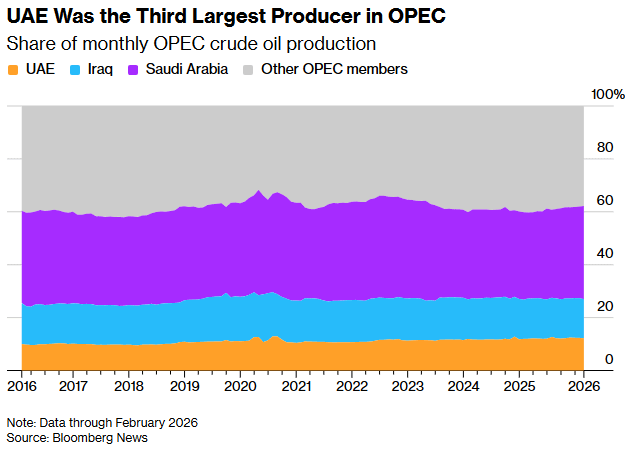
In a historic move, the United Arab Emirates has announced it will exit OPEC on May 1, 2026, ending a sixty-year partnership and dealing a major blow to the cartel’s global influence.
The decision stems from long-simmering tensions with Saudi Arabia over production quotas. The UAE has invested billions to expand its capacity and intends to operate as a “wild-card” player, capturing market share free from OPEC constraints once regional supply lines normalize.
While the ongoing closure of the Strait of Hormuz has temporarily rendered quotas irrelevant, the UAE’s exit signals a long-term shift toward a price-competitive strategy rather than the traditional price-support model.
The departure of OPEC’s third-largest producer raises existential questions for the alliance, which has already seen its market power eroded by U.S. shale and internal OPEC non-compliance.
For now, the burden of balancing global oil markets falls almost entirely on Saudi Arabia and Russia, a task made more difficult by the UAE's move to monetize its oil supremacy.
California’s AI Paradox: Record VC Investment vs. White-Collar Job Loss
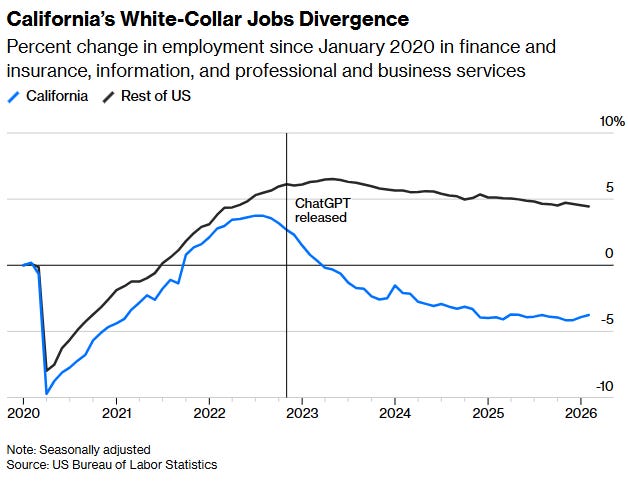
California is experiencing a striking divergence between capital flows and labor demand, securing an unprecedented 85% of all U.S. venture capital in Q1 2026.
This $228 billion haul is largely concentrated in the state’s AI titans, with OpenAI and Anthropic alone accounting for more than half of that total.
However, this financial dominance has not translated into job growth; the state has shed roughly 107,900 tech jobs since August 2022, an 11% decline. While California remains the global epicenter for AI innovation, it is also the first to experience the displacement effects of the technology it creates.
Established giants like Meta continue to announce significant layoffs, cutting headcount by 10% to pivot resources toward the very AI investments that are currently centralizing wealth in the Bay Area.
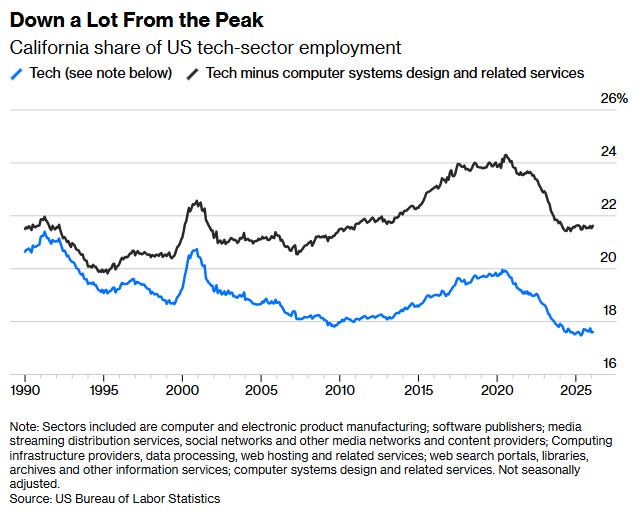
Economists argue that California may be serving as a testing ground for how AI displaces traditional roles in finance, information, and professional services. While the state’s share of national tech employment is near an all-time low, a modest recent stabilization in headcount offers a glimmer of hope that the initial AI-replacement wave may be plateauing.
OpenAI Misses Key Revenue, User Targets Amidst Push Toward IPO
OpenAI is facing a critical internal reckoning as a recent miss on revenue and user growth targets has triggered concerns about the company’s massive $600 billion in data-center spending commitments.
According to the WSJ, CFO Sarah Friar has reportedly expressed alarm that the current business slowdown, marked by missing a milestone of one billion weekly active users and losing market share to rivals like Google and Anthropic, could jeopardize the company’s ability to fund its vast computing contracts.
While CEO Sam Altman and Friar issued a joint statement denying any rift, the company’s financial discipline is under a microscope as it prepares for a potential IPO by the end of 2026.
This scrutiny has already sent ripples through the tech sector, contributing to significant stock declines for partners like Nvidia, Oracle, and SoftBank.
Despite the recent $122 billion record-breaking funding round, OpenAI’s projected cash burn remains aggressive, with expectations to exhaust those funds within three years if ambitious revenue targets aren’t met.
To manage costs, the company has begun scaling back certain initiatives, such as its Sora video-generation app, while pivoting resources toward more profitable tools like its coding assistant, Codex.
The path to a public listing is further complicated by an ongoing legal battle with Elon Musk, who is seeking to unwind the company’s for-profit conversion.
You’ll Find This Interesting
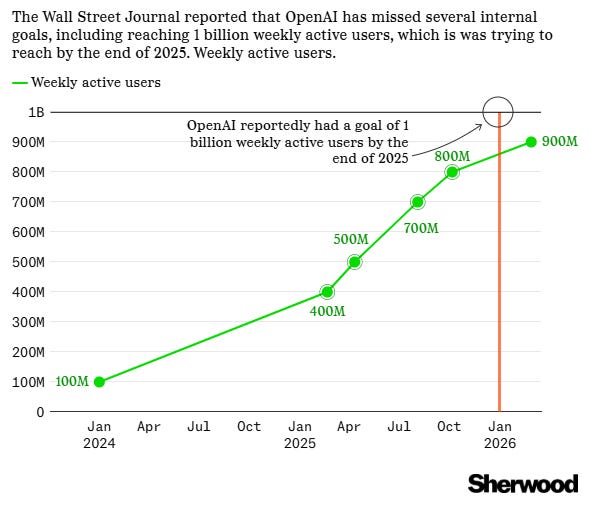
Chart of the Week

In Case You Missed It