
🤝📦 OpenAI x Amazon??
Happy Wednesday all,
Markets are weighing a cooling US labor market, shifting expectations for interest rates, and a new wave of strategic maneuvering across tech and housing finance. Slowing job growth and rising unemployment are reinforcing bets that the Federal Reserve may need to cut rates further next year, even as data distortions complicate the outlook. At the same time, OpenAI’s talks with Amazon signal an escalating arms race in AI infrastructure, while Fannie Mae and Freddie Mac quietly expand their balance sheets in a move that could influence mortgage rates and housing affordability.
Enjoy this week’s Hump Days!
- Humphrey & Rickie

👀 Eye-Catching Headlines
OpenAI in talks with Amazon about investment that could exceed $10 billion (CNBC)
Robinhood is rolling out NFL parlay and prop bets on prediction markets platform (CNBC)
Spooked by AI and Layoffs, White-Collar Workers See Their Security Slip Away (WSJ)
High-Speed Traders Are Feuding Over a Way to Save 3.2 Billionths of a Second (WSJ)
The Weekly Brief
US Labor Market Shows Continued Cooling
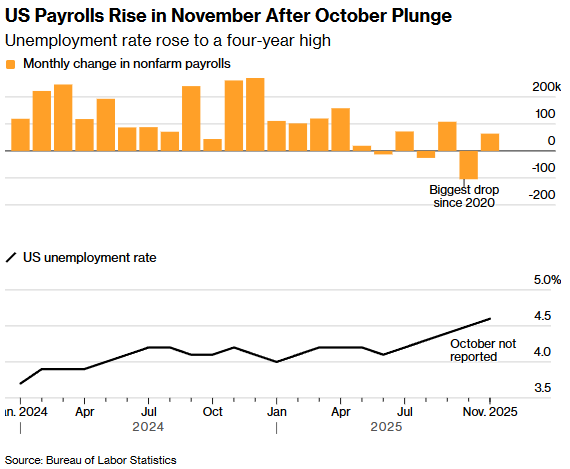
US job growth remained sluggish in November as nonfarm payrolls increased by only 64,000, following a massive, revised decline of 105,000 in October.
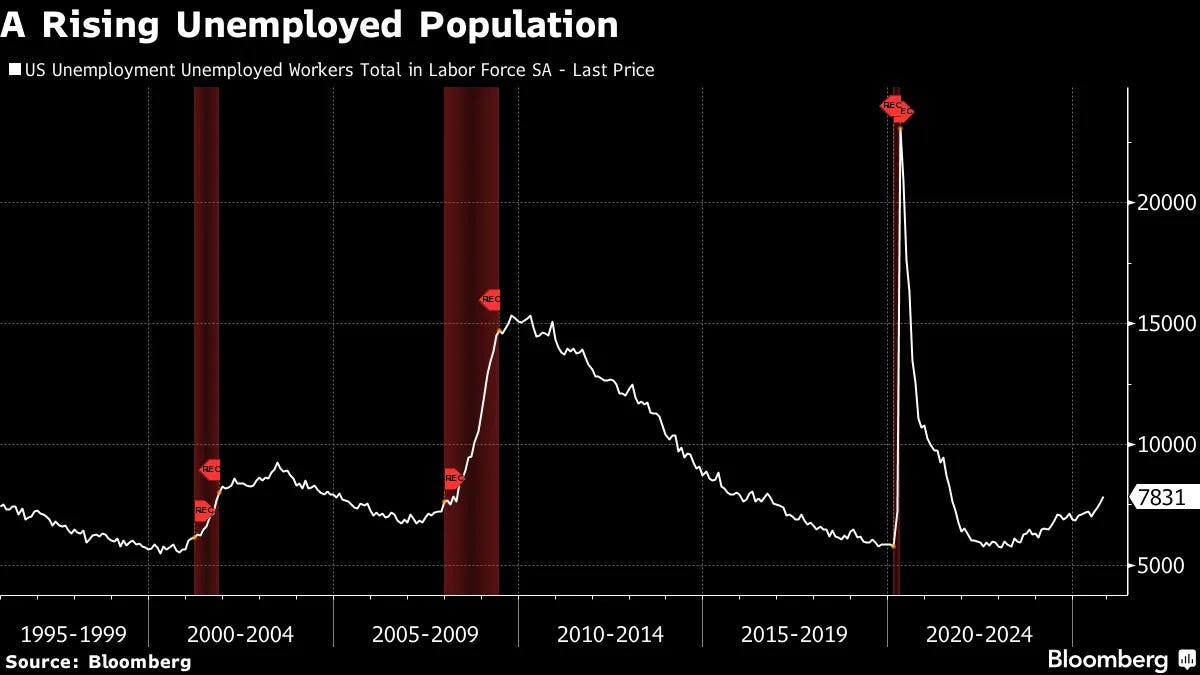
The unemployment rate climbed to a four-year high of 4.6%, driven by a surge of people returning to the workforce and a significant increase in long-term unemployment.
While sectors like healthcare and construction saw gains, the overall report highlights a “gradually cooling” labor market that has prompted the Federal Reserve to lower interest rates for three consecutive meetings to mitigate the risk of a further slowdown.
The data, however, carries some uncertainty due to the recent record-long government shutdown, which forced the Bureau of Labor Statistics (BLS) to combine the October and November reports.
The BLS noted that the household survey results, which determine the unemployment rate, were more variable than usual because of lower-than-normal response rates.
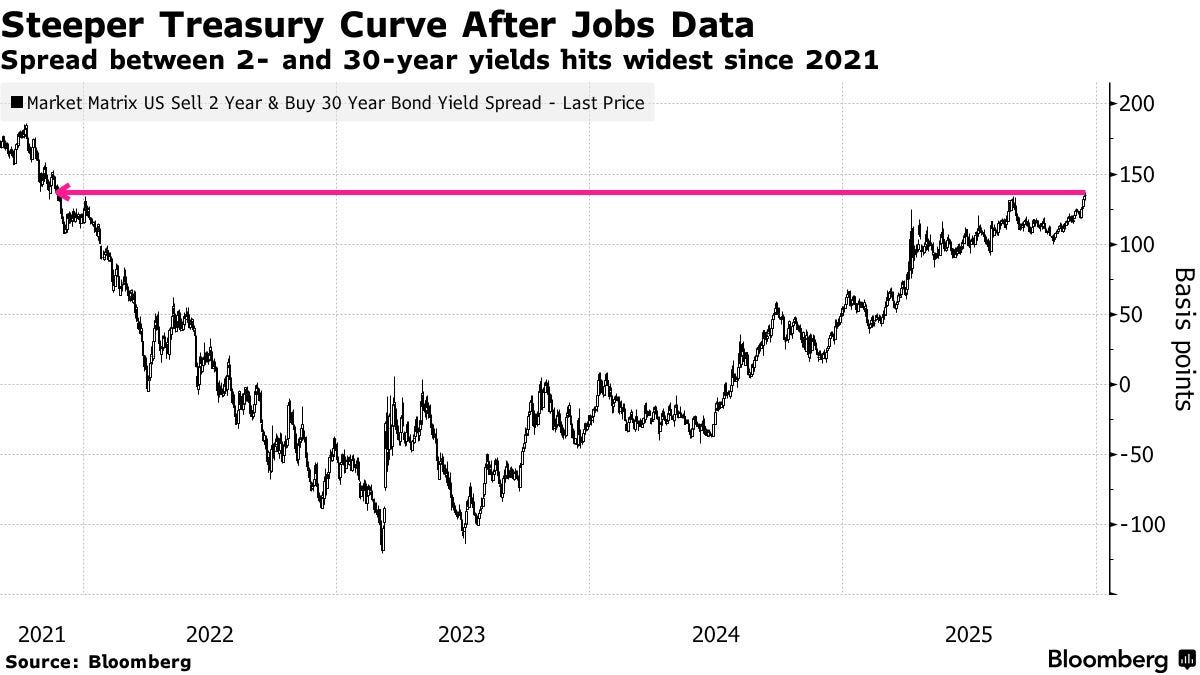
Despite these technical distortions and split opinions among Fed officials regarding future cuts, bond traders are increasingly betting on a “steepening” yield curve, anticipating that the Fed will need to deliver at least two more rate cuts in 2026 to support the softening economy.
OpenAI and Amazon in $10 Billion Investment Talks
OpenAI is in preliminary discussions to raise at least $10 billion from Amazon, a deal that could value the AI startup north of $500 billion.
As part of the potential agreement, OpenAI would adopt Amazon’s custom-designed Trainium chips to power its intensive AI models.
This move represents a strategic pivot for OpenAI, which has historically relied on Nvidia hardware and is heavily backed by Amazon’s primary cloud rival, Microsoft.
The potential deal follows a massive $38 billion agreement signed last month in which Amazon Web Services committed to providing OpenAI with cloud computing power over seven years.
Fannie and Freddie Quietly Expand Portfolios As Potential Push to Lower Rates
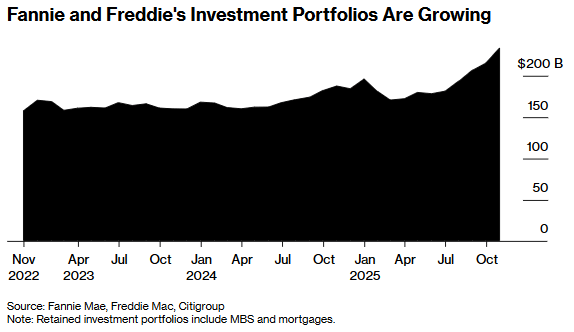
Fannie Mae and Freddie Mac have increased their combined retained portfolios, mortgages and bonds held on their own balance sheets, by more than 25% over the five months ending in October, reaching a total of $234 billion.
This strategic buildup is fueling speculation that the Trump administration is using the government-sponsored enterprises (GSEs) as a flexible tool to lower mortgage rates by shrinking the supply of securities available to private investors.
Analysts at Citigroup estimate the GSEs could add up to $100 billion more in 2026, a move that could compress risk premiums and provide a rare avenue for the administration to influence housing affordability independently of the Federal Reserve.
Beyond lowering consumer rates, expanding these portfolios serves a dual purpose: it boosts the companies’ interest income and overall profitability, making them more attractive for a potential return to public markets.
Administration officials have signaled that an IPO for the two giants could happen sooner rather than later, and showing sustained earnings growth is considered essential to lure investors.
However, the shift has revived concerns among some market watchers about a return to the pre-2008 era, when massive, highly leveraged balance sheets at Fannie and Freddie contributed to the financial crisis.
You’ll Find This Interesting

Chart of the Week
In Case You Missed It