
🚢❌ Iran Ceasefire Collapsed

Happy Sunday,
Markets entered the week on increasingly shaky footing as geopolitical tensions flared once again and investors began reassessing the outlook for inflation, interest rates, and AI spending. The collapse of the U.S.-Iran ceasefire has reignited concerns over energy markets, while the Federal Reserve continues to emphasize its commitment to price stability despite recent signs of cooling inflation.
In this week’s Market Report, we break down the renewed conflict in the Middle East, what Kevin Warsh’s first congressional testimony signals for the path of interest rates, and why investors are becoming more demanding of Big Tech’s massive AI investments.
- Humphrey & Rickie

Market Report
The Iran Ceasefire Has Collapsed As the Middle East Heats Up
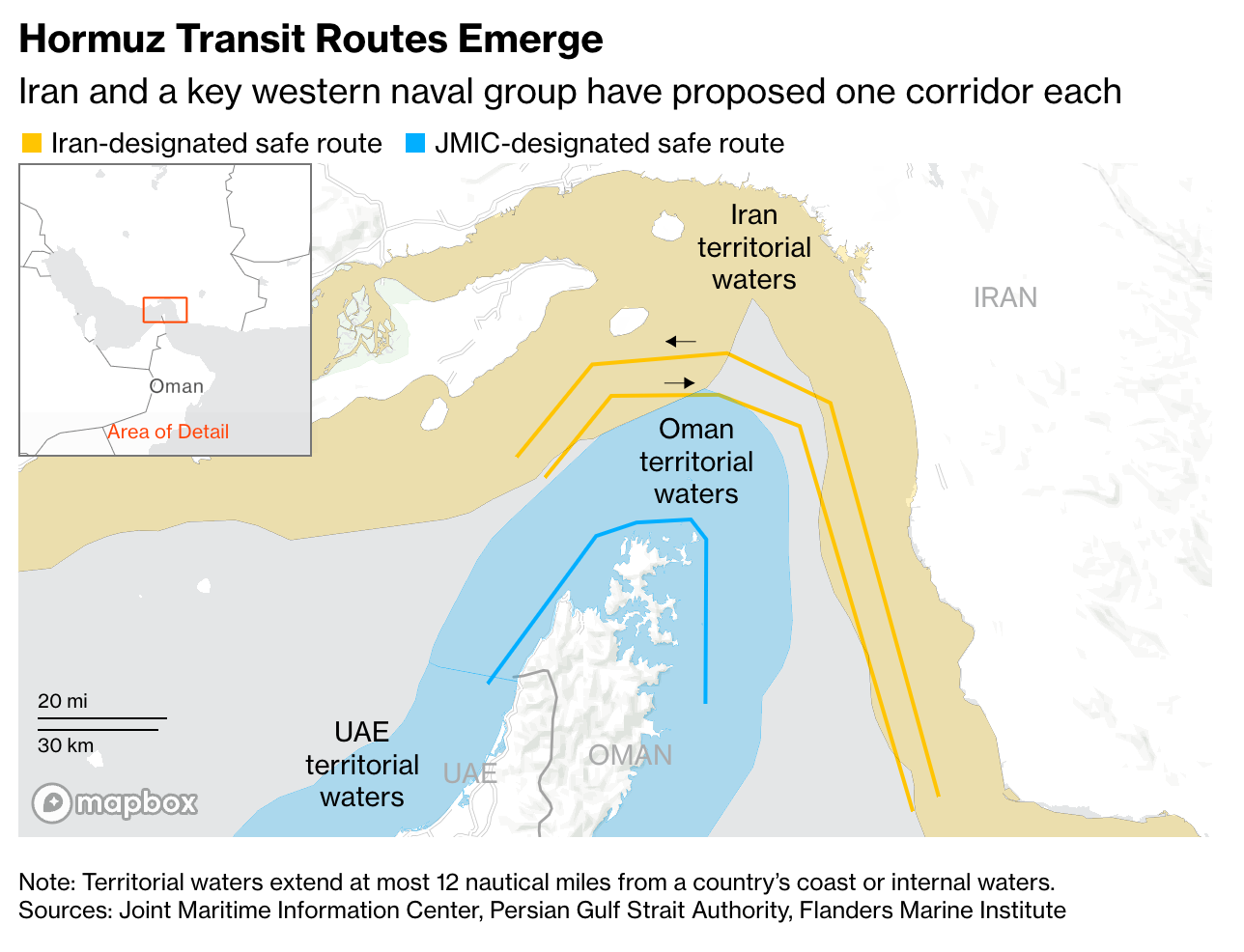
The fragile U.S.-Iran interim peace deal has effectively disintegrated, with both sides abandoning the memorandum of understanding signed last month and returning to an accelerating cycle of military strikes.
Iran killed two American service members in Jordan, prompting U.S. retaliatory strikes on Qeshm Island and multiple southern Iranian cities.
Iran responded by targeting Kuwait’s power and desalination infrastructure for the third time in as many days, launching drones at U.S. bases in Kuwait and Bahrain, and firing missiles intercepted over Jordan.
The IRGC Navy also halted four tankers attempting to transit the Strait of Hormuz, vowing that “not a single drop of oil, gas, or chemical fertilizer” will pass without Iranian permission.
The U.S. has reimposed its blockade on Iranian ports and scrapped the oil export sanctions waiver, reversing the economic concessions that briefly brought oil prices down, while sending additional F-16s and F-35s to the region in what appears to be preparation for further escalation.
Brent crude surged back toward $88 a barrel on Friday in its biggest weekly advance since April, as tanker traffic through Hormuz dropped again and attacks on energy infrastructure raised fears of sustained supply disruption.
The June CPI report had offered a brief window of inflation relief driven by falling gasoline prices, but a sustained return to hostilities threatens to reverse that entirely.
Warsh Vows to Deliver Price Stability, Fed ‘Regime Change’
In his first congressional testimony as Fed Chairman, Kevin Warsh struck a deliberately hawkish tone on inflation while carefully avoiding any commitment to an imminent rate hike.
Appearing before the House Financial Services Committee on the same morning the June CPI report showed the first monthly price decline in six years, Warsh pointedly dismissed the data as a single point not to be over-interpreted, particularly given that a resumption of U.S.-Iran hostilities has already sent oil prices surging again.
His core message: the Fed has “no tolerance” for persistently elevated inflation and will do what’s necessary to restore price stability, regardless of political pressure from President Trump to cut rates.
On the economy, he described the labor market as broadly stable and was cautiously upbeat overall, while acknowledging deep uncertainty about the AI boom’s ultimate inflation and employment implications.
Beyond the rate debate, Warsh used the testimony to signal a broader transformation of how the Fed operates. He indicated he may not hold press conferences after every FOMC meeting, as Powell did, though he promised any communication changes wouldn’t be about “hiding the ball.”
Big Tech Increasingly Asked to Justify AI Spending as Investors Dump Stocks
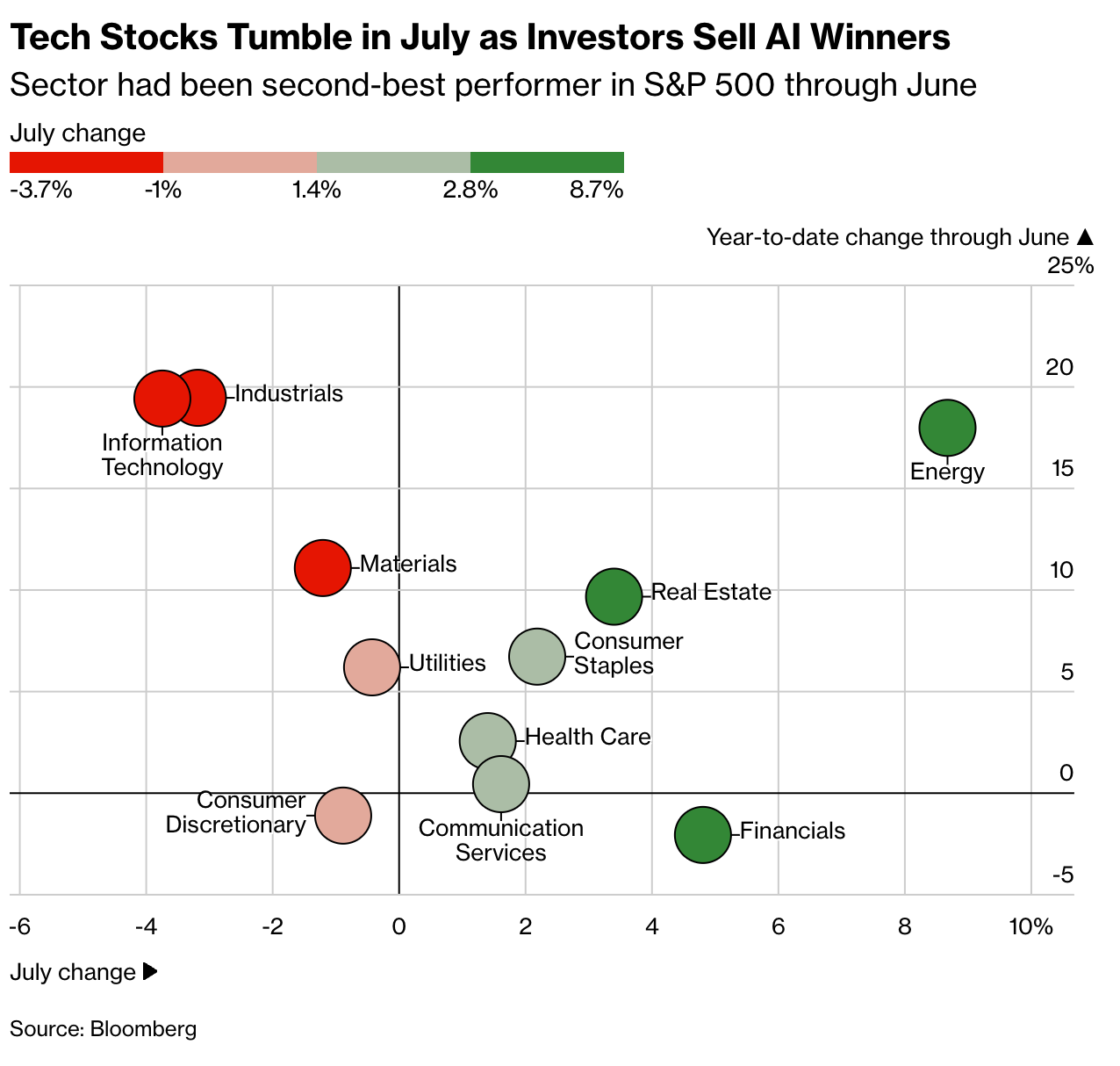
The AI euphoria that drove markets to all-time highs just a month ago is visibly fading. Tech was the worst-performing S&P 500 sector last week, the Nasdaq 100 fell 4.1%, and the Philadelphia Semiconductor Index plunged 10%, its worst week since April 2025.
SpaceX fell below its IPO price after losing 25% over two weeks and erasing $1 trillion from its peak market cap.
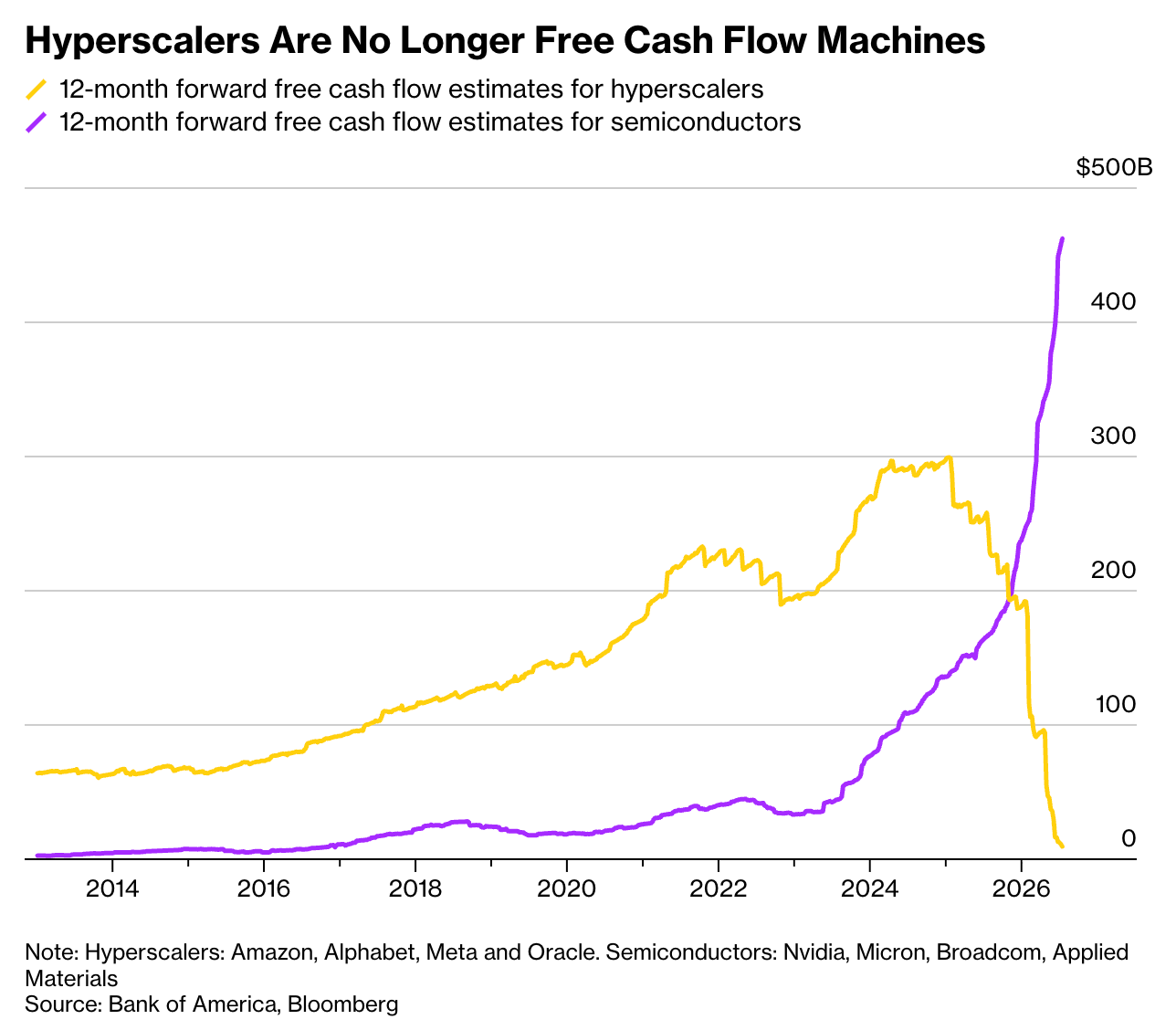
Investors are growing uncomfortable with the scale of AI capital expenditure and asking for proof that the spending is generating adequate returns before bidding valuations back up. Alphabet alone is projected to spend $187 billion this year, with the four biggest hyperscalers combined forecasting up to $725 billion in capex.
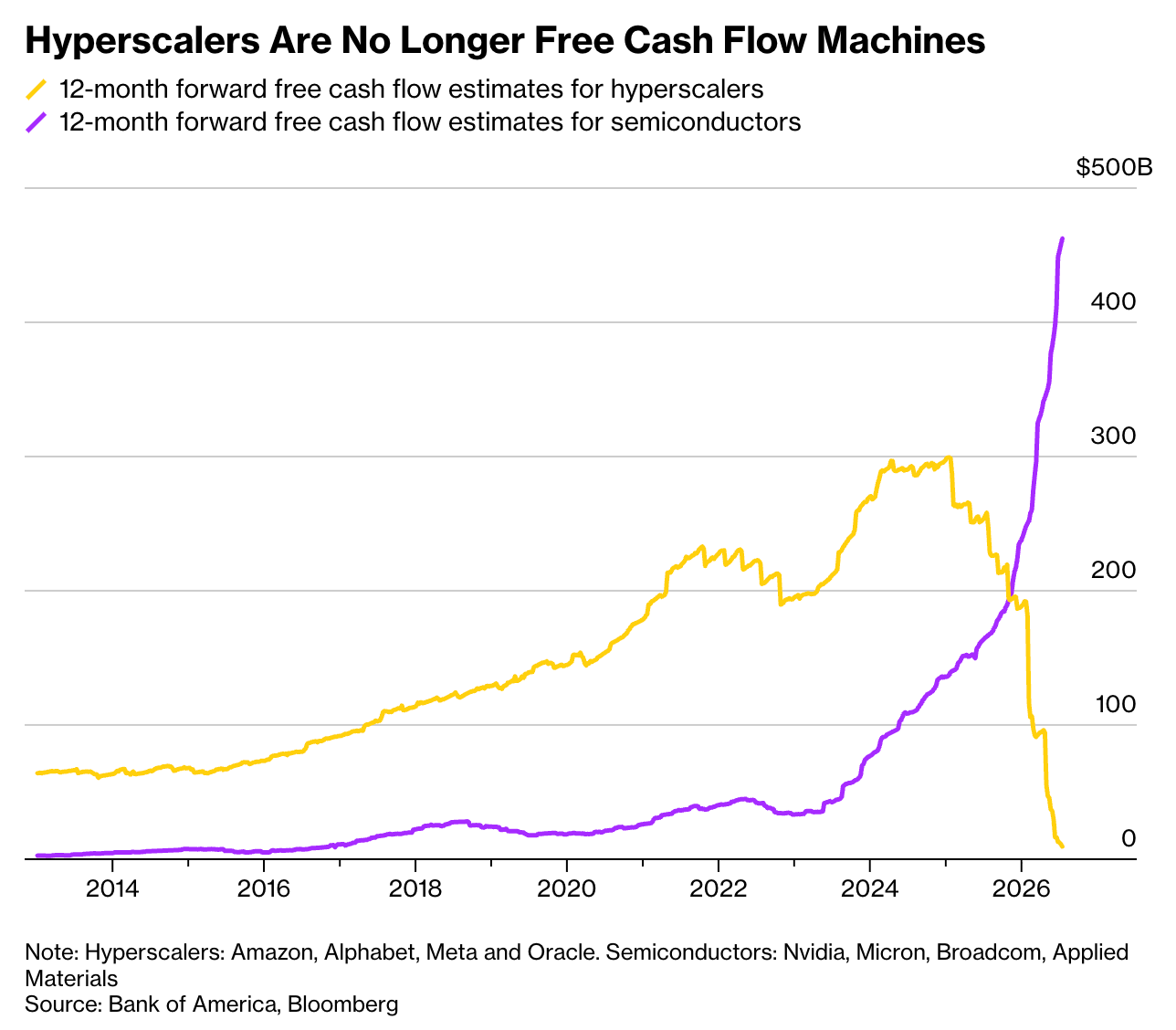
The next two weeks of Big Tech earnings will be the defining test. Alphabet, Tesla, Microsoft, Meta, Apple, and Amazon report in rapid succession, and analysts will scrutinize cloud gross margins, AI revenue per dollar of compute, and any guidance on whether capex growth is slowing or accelerating.
Alphabet faces particular scrutiny after reports it’s months behind schedule on its most powerful Gemini model. The one clear winner in this rotation is Apple, up 23% this year, precisely because it has avoided massive AI capex in favor of partnerships with model providers.
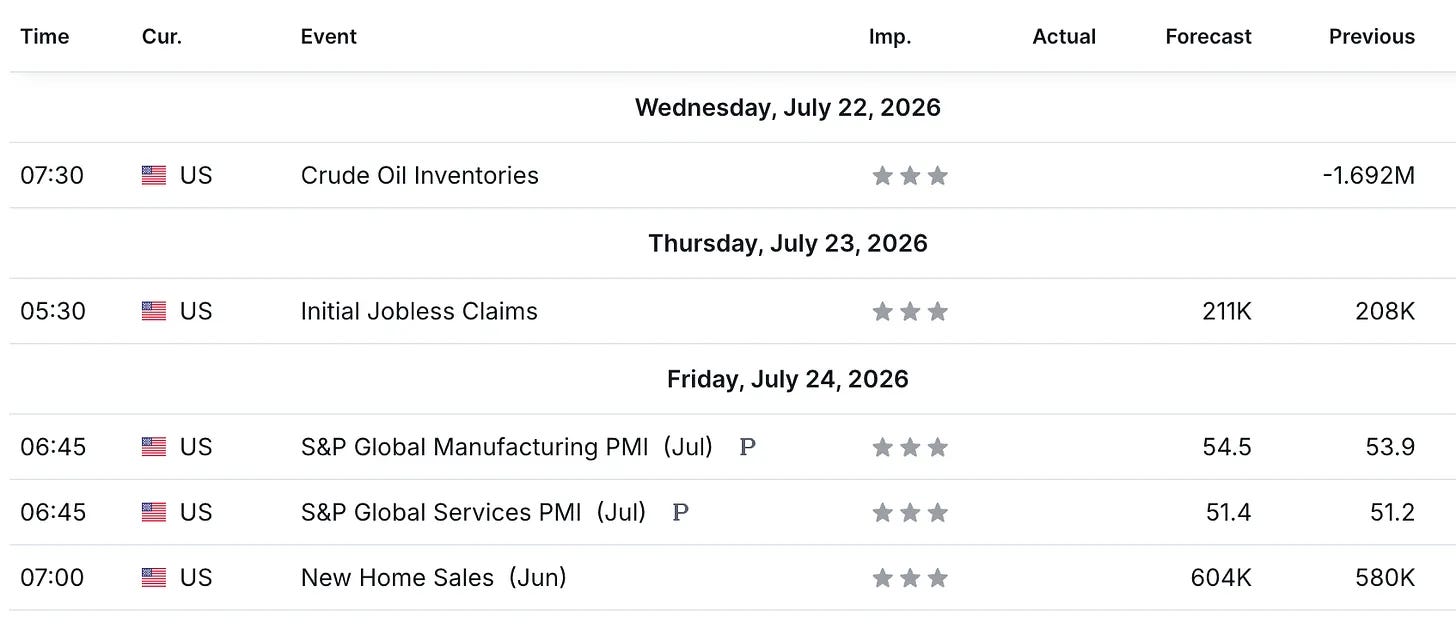
Forecast Ahead
Big Number
In Case You Missed It