
🚀💸 Inside the SpaceX IPO

Happy Sunday,
SpaceX went public under the ticker SPCX and prices debuted at $135/share, by the end of the trading day, the stock settled in at the price of $160.95, up about 19%. This means that SpaceX’s valuation is over 2T, putting it in the top 10 companies by market cap on its IPO day.
If you’re wondering how a “Space Exploration” company is valued at such levels, it really comes down to their other business models: Starlink, and the AI division they own, xAI (which also includes Grok, and X). Still though, it’s an overly hyped IPO and I personally think it will start trading lower as time passes and shares get unlocked for employees and executives.
LPL Research analyzed 1500 IPOs over the last 30 years, and has stated that IPO performance has been a mixed bag with returns being quite volatile. “The average maximum drawdown in the first year after an IPO was 48.9%, and the median drawdown was similar at 48.0%. That means even most positive outcomes typically experienced steep declines in their first year of trading in public markets”.
So what does this mean for you? If you’re interested in buying SpaceX as a portfolio position: first, I’d wait a bit (3-6 months) for the dust to settle. Then, if you want to invest in it, just know that volatility is going to be part of the story in the early days.
Besides that, this weekend has been quite eventful with World Cup games, and the NBA Finals. I’m actually going to the Australia Paraguay game in a couple of weeks! Excited to see my first ever World Cup game. I hope you’re having a great weekend.
- Humphrey & Rickie

Market Report
SpaceX’s IPO Made Musk a Trillionaire and Reshaped What “Going Public” Looks Like
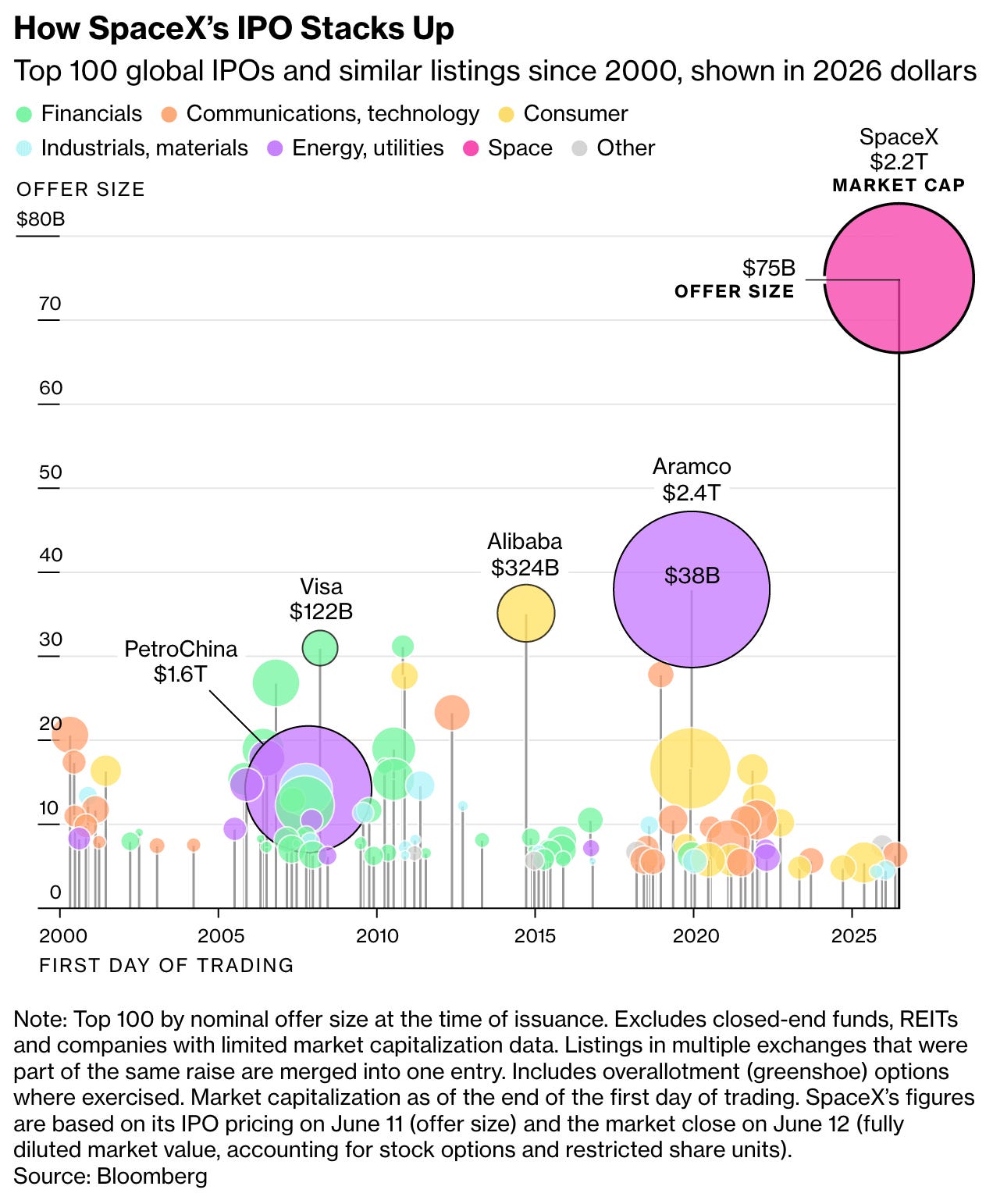
SpaceX completed the largest IPO in history on Friday, raising $75 billion at a fixed price of $135 per share, an unconventional approach for a deal this size that Musk and CFO Bret Johnsen pushed for to make the process faster and more transparent.
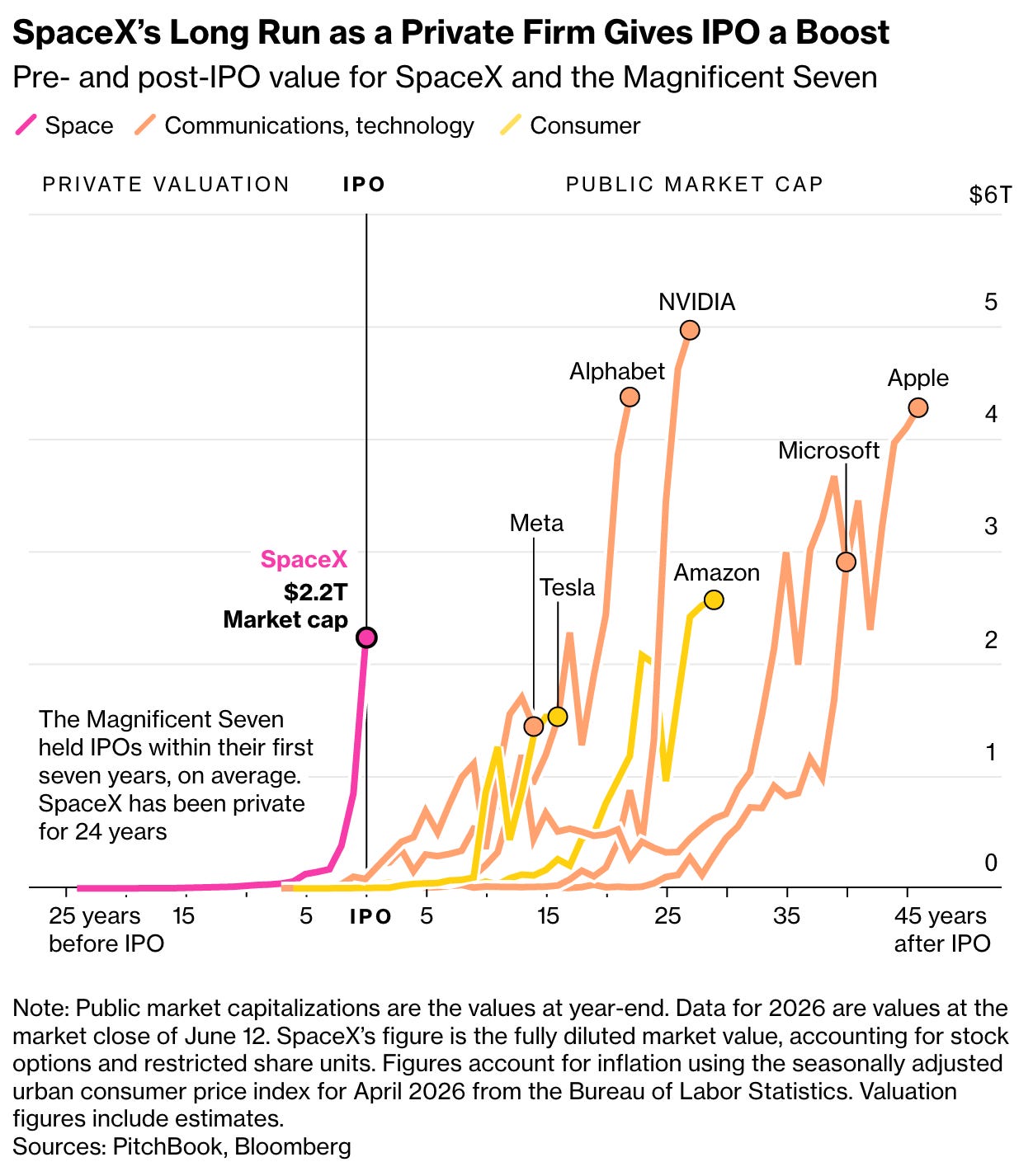
Shares jumped as much as 31% on debut before closing at $160.95, giving SpaceX a fully diluted market value of $2.2 trillion and instantly making Musk the world’s first trillionaire while leapfrogging Tesla in market cap.
In the final months before listing, SpaceX abruptly pivoted toward AI, merging with Musk’s xAI in a deal that valued the startup at $250 billion and later announcing plans to acquire AI coding startup Cursor for $60 billion.
Roughly $15 billion, or about 20% of the offering, went to individual investors, an unusually large allocation driven by Musk’s long-stated preference for small investors over institutions.
Demand was overwhelming, with retail orders exceeding $100 billion, meaning most individual investors received only a small fraction of what they requested.
The bigger questions now are whether SpaceX can justify a $2.2 trillion valuation as a still cash-burning company (posting a $6.4 billion operating loss last year) and whether its rapid AI pivot represents a durable new business or opportunistic timing ahead of the OpenAI and Anthropic IPOs.
The US Government Just Ordered Anthropic to Cut Off Its Most Advanced AI Models Globally
In an unprecedented move, the Trump administration ordered Anthropic to suspend access to its most advanced AI models, Fable 5 and Mythos 5, for all foreign nationals worldwide, citing national security concerns.
The order reportedly stemmed from jailbreak research conducted by Amazon, which found a way to bypass safety guardrails on Fable 5, a version of Mythos that Anthropic had already restricted from performing cybersecurity tasks.
Anthropic pushed back publicly, arguing that recalling a widely-deployed commercial model over a “narrow potential jailbreak” sets a standard that, if applied industry-wide, would halt new AI model deployments altogether.
This marks the first time the US government has restricted access to the underlying AI software itself, rather than just hardware like chips. The timing is notable given that both Anthropic and OpenAI are pursuing IPOs as soon as this year, following SpaceX’s record-breaking debut.
Trump Says He’ll Sign Deal With Iran to Reopen Hormuz Sunday
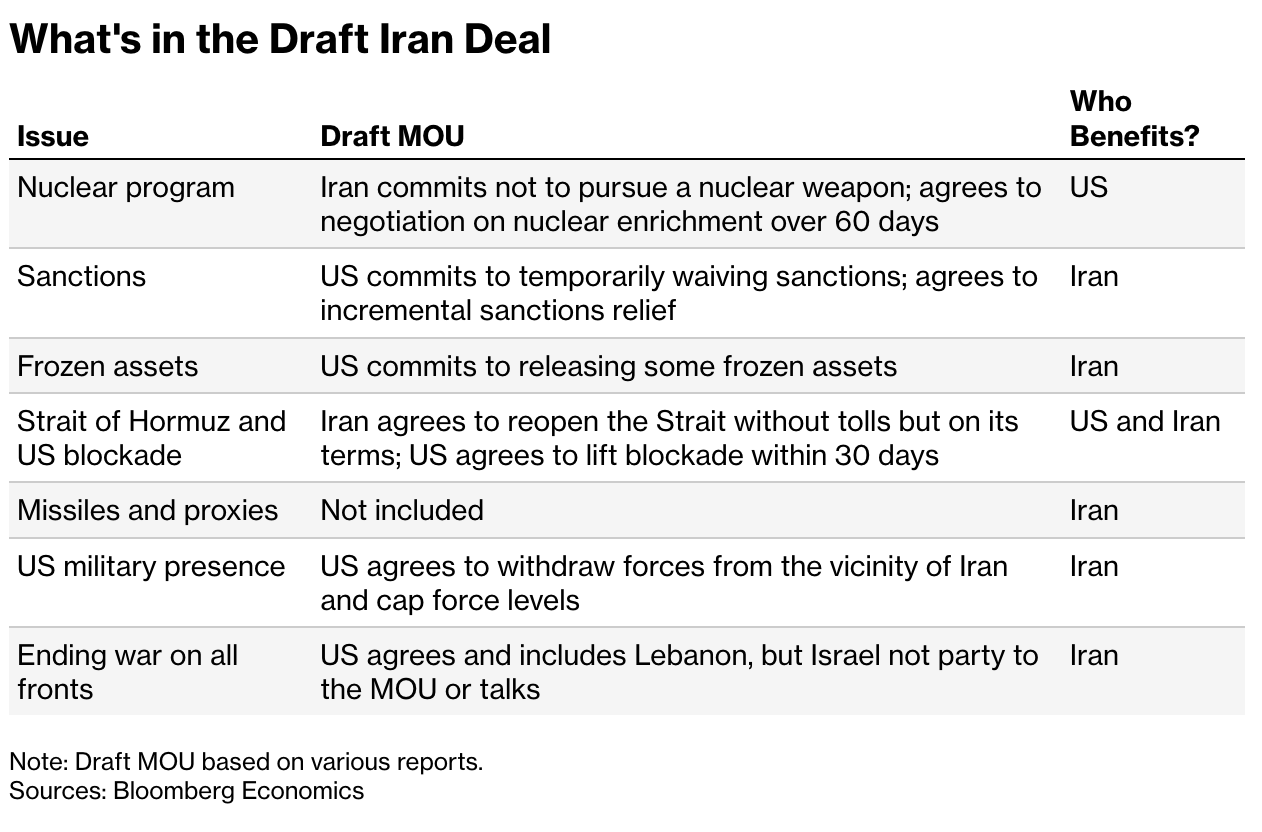
Trump announced on social media that an interim deal to reopen the Strait of Hormuz and end the four-month Iran conflict would be signed Sunday, declaring the waterway would be “OPEN TO ALL” immediately afterward.
Iran quickly poured cold water on the timeline, with a government spokesman ruling out a Sunday signing and noting the deal still requires approval from Iran’s Supreme Leader.
Key disagreements remain unresolved as Iran wants compensation for war damages and access to its frozen assets, while Trump insists Tehran gets no money.
Markets reacted to the optimism even before any signing. Brent crude fell as much as 5.1% Friday to its lowest level since the war began, while European gas dropped over 8%. Brent is still up nearly 50% for the year but well off its April peak of $125.
Trump has announced an imminent deal dozens of times without follow-through, and even the senior US official’s optimism comes with major caveats. Iranian hardliners and some Republican hawks both oppose elements of the deal, and there’s a real chance Iran has placed mines in the Strait that would need clearing by a UK-France coalition even if a deal is signed.
A real reopening of Hormuz would be bullish for easing inflation and market pressure, but until ink is actually on paper and shipping data confirms normalized flows, treat this as a potential catalyst rather than a done deal.
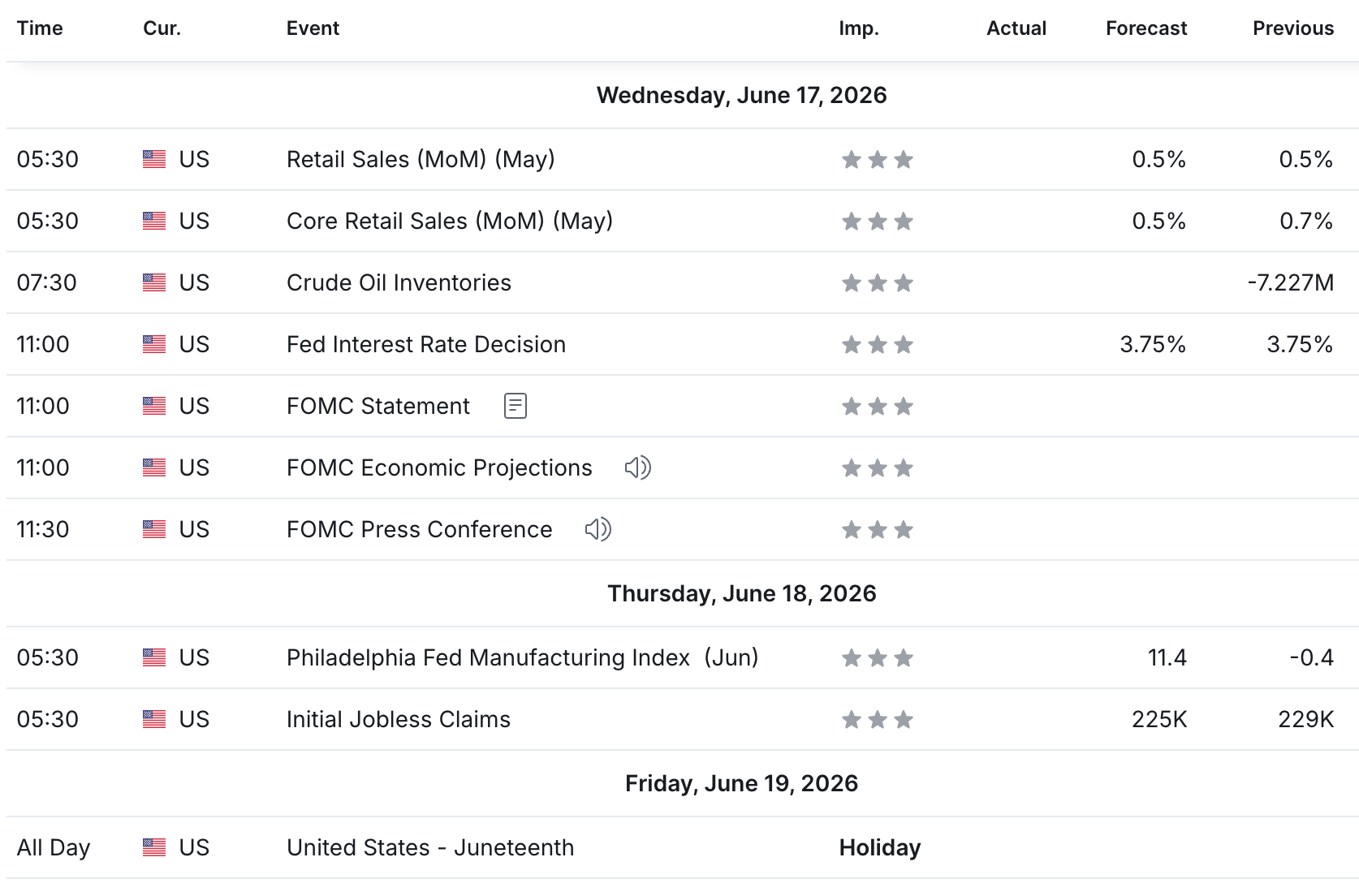
Forecast Ahead
Big Number
Overcome the Sunday Scaries

In Case You Missed It