
🇺🇸❌ Inside the Gov't Shutdown
Happy Wednesday all,
This week’s Hump Days dives into market-moving headlines. From a historic US government shutdown to surprising developments in labor data, corporate earnings, and the global chip war. We’re also tracking whispers of Berkshire Hathaway’s next big move and the evolving conversation around crypto ETFs.
Enjoy this week’s Hump Days!
- Humphrey & Rickie

👀 Eye-Catching Headlines
US government shuts down after midnight as Congress fails to pass funding bills (CNBC)
Warren Buffett is reportedly eyeing Berkshire Hathaway’s biggest deal in three years (CNBC)
Government Shutdown Begins as Funding Lapses (WSJ)
Investors Are Fretting That the Stock-Market Rally Is on Borrowed Time (WSJ)
Vanguard Weighs Allowing Trading of Crypto ETFs (BBG)
Taiwan Rejects US Demand for Half of Chips to Be Made in America (BBG)
The Weekly Brief
US Begins Government Shutdown With Trump, Democrats at Impasse
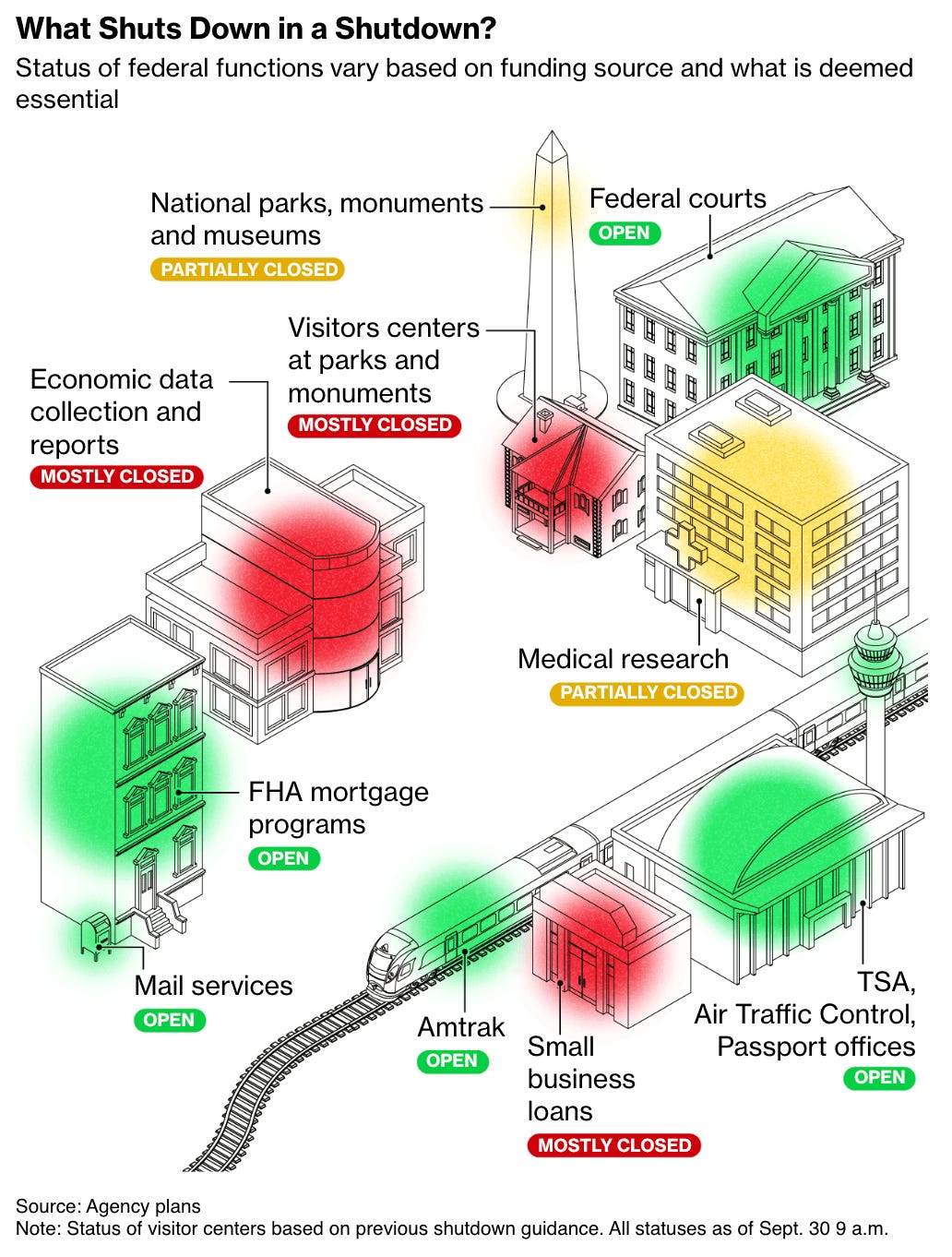
The US government has entered a shutdown after Congress failed to pass a funding bill by the midnight deadline.
The White House has ordered federal agencies to cease non-essential operations, leading to the furlough of an estimated 750,000 government employees and disrupting numerous public services.
The shutdown stems from a political stalemate, with Democrats leveraging the deadline to demand concessions on healthcare subsidies, while Republicans push for a stopgap spending bill.
The economic consequences could be significant, especially if the shutdown is prolonged. Economists warn that a three-week shutdown could cause the unemployment rate to spike, and the delay in releasing key economic data, such as the jobs report, could complicate the Federal Reserve’s decisions on interest rates.
President Trump has raised the possibility of using the shutdown to conduct mass layoffs of federal workers, a move that could worsen the economic fallout and potentially trigger a recession in areas with a high concentration of government employees.
Legislatively, a House-passed bill to fund the government through November 21 has twice failed to get the necessary Democratic support to advance in the Senate. Republicans, led by Senate Majority Leader John Thune, insist Democrats are holding the government “hostage,” while Democratic Leader Chuck Schumer argues they are using a rare point of leverage to protect programs like the Obamacare premium tax credits, which are set to expire.
Nike’s Turnaround Takes Shape With Better-Than-Expected Sales
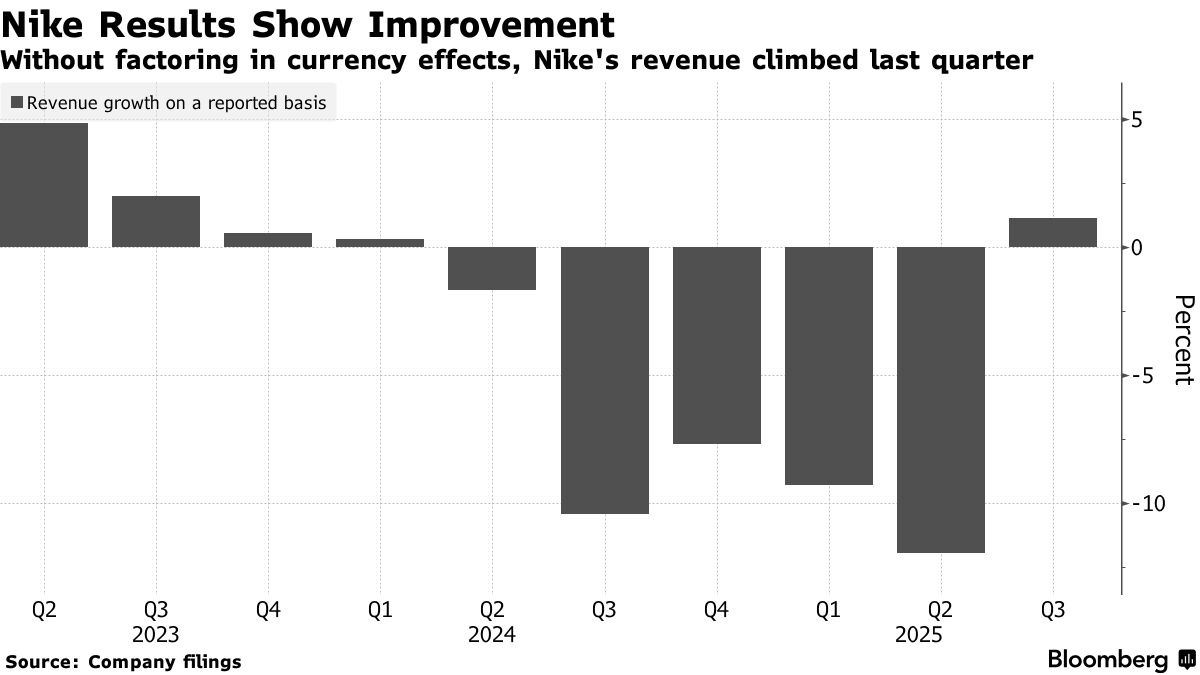
Nike’s turnaround strategy is beginning to yield positive results, as the company reported a smaller-than-anticipated sales drop in its latest quarter.
Sales were $11.7 billion, beating Wall Street expectations, which caused the company’s stock to rise.
The improved performance is credited to a strategic reset led by CEO Elliott Hill, focused on revitalizing core sports categories like running, clearing out old inventory, and rebuilding relationships with wholesale retailers.
A key area of success is the company’s running business, which has seen over 20% sales growth after redesigning its major shoe lines.
Wholesale revenue also increased by 5%, boosted by Nike’s return to Amazon and a stronger presence in retailers like Foot Locker.
However, the company still faces significant obstacles, including $1.5 billion in anticipated costs from US tariffs, continued weak sales in Greater China, and a steep 28% decline in its Converse brand.
US Job Openings Hold Steady, With Few Layoffs and Weak Hiring
The US job market showed signs of a gradual slowdown in August, as job openings remained steady while the hiring rate fell to its lowest point since June 2024.
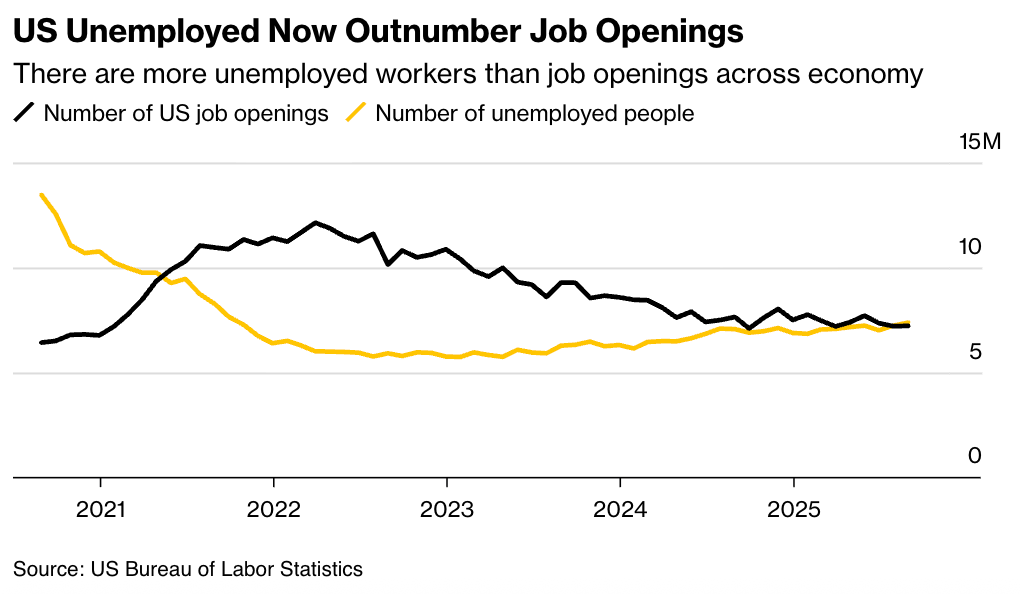
According to the Bureau of Labor Statistics, available positions were little changed at 7.23 million. However, a drop in the number of people voluntarily leaving their jobs to the lowest level this year suggests workers are becoming less confident in their ability to find new employment.
For the second consecutive month, there are more unemployed people than available jobs, a shift from the tight labor market of previous years.
Furthermore, a separate report showed consumer confidence fell in September to a five-month low, with concerns about the cooling job market being a primary factor. These trends are being closely watched by the Federal Reserve, which cited labor market weakness as a reason for its recent interest rate cut.
You’ll Find This Interesting
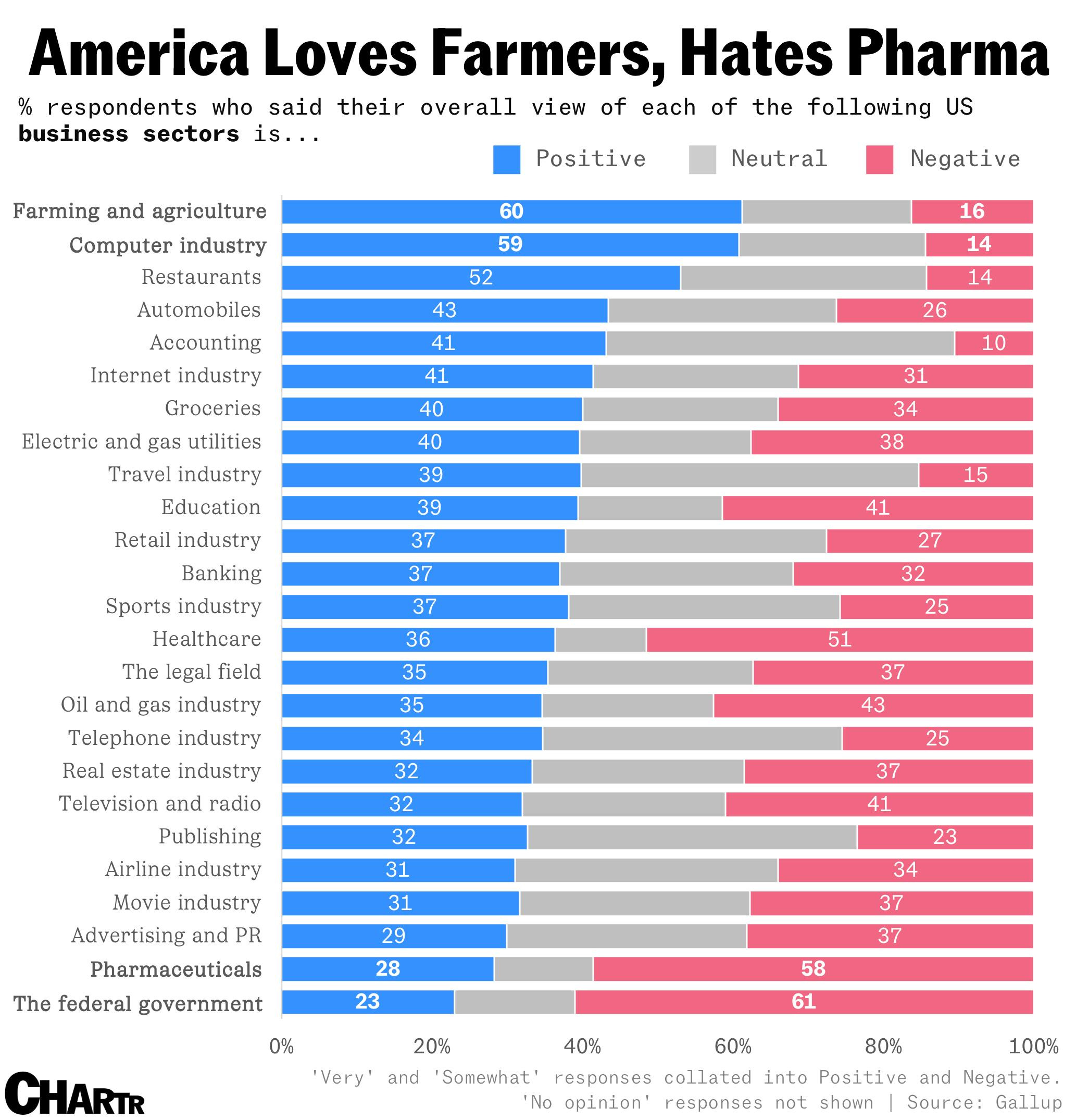
Chart of the Week
In Case You Missed It