
📉💻 Big Tech Valuations Declining?

Happy Sunday,
Markets received another reminder this week that strong earnings alone are no longer enough to satisfy investors. As AI spending continues to accelerate, companies are increasingly being judged on their ability to translate enormous capital investments into sustainable cash flow. At the same time, the labor market remains remarkably resilient, complicating the outlook for interest rates.
In this week’s Market Report, we examine why Alphabet’s results sparked a broad tech selloff, what another historically low jobless claims report means for the Federal Reserve, and how the return of single-stock futures could reshape the trading landscape for retail investors.
- Humphrey & Rickie

Market Report
Alphabet Falls as Massive Spending Plan Fuels AI Cost Fear
Alphabet reported a strong quarter as cloud revenue surged 82% and YouTube beat estimates.
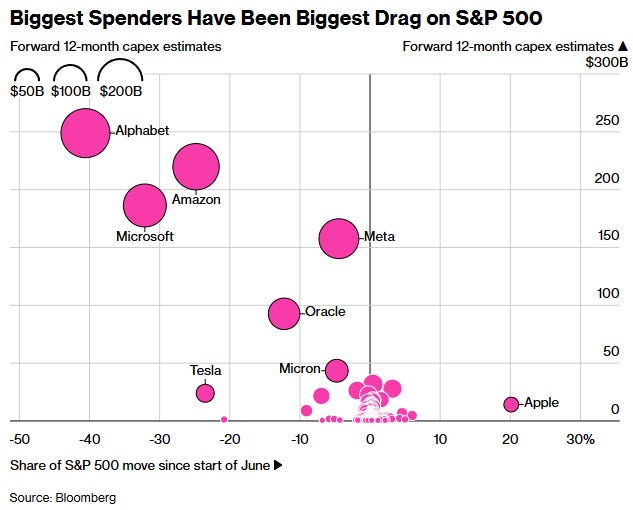
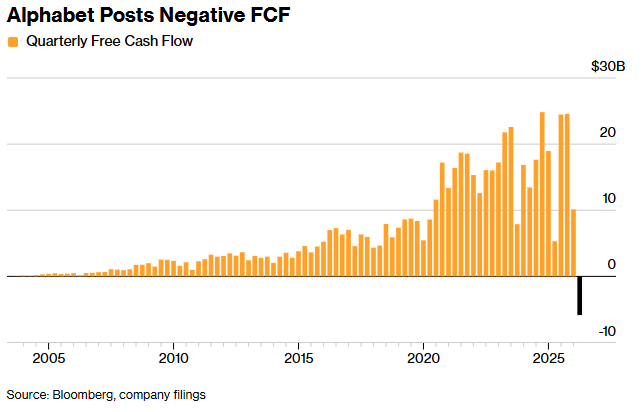
Despite this, the stock still plunged more than 7% after the company raised its 2026 capital expenditure guidance to as much as $205 billion and disclosed that free cash flow turned negative for the first time since its 2004 IPO.
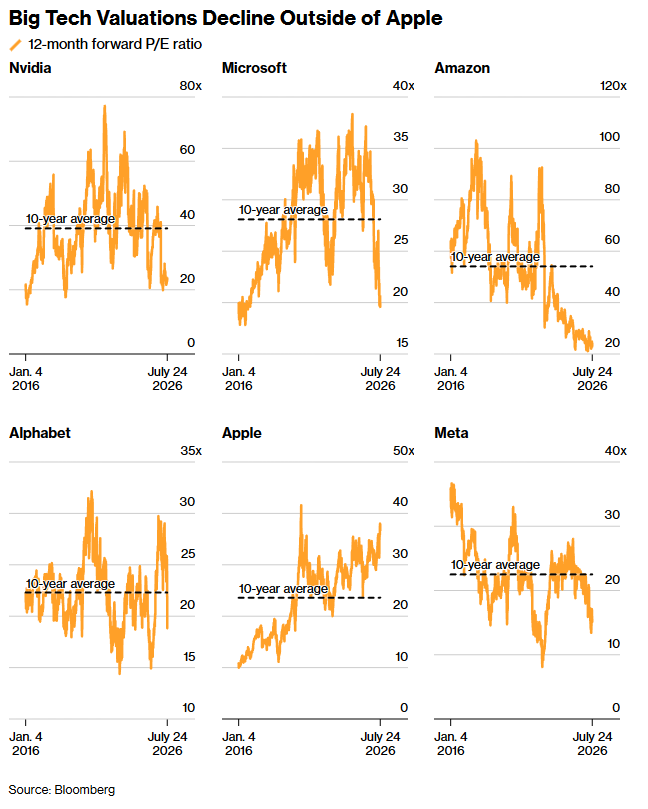
The Magnificent Seven index fell 4.8% on the day, its worst session since Trump’s tariff “Liberation Day”, and is now down 3.7% for the year after three years of dominance.
Together, Alphabet, Microsoft, Amazon, and Meta are projected to spend roughly $724 billion on AI capex this year, rising to nearly $950 billion in 2027, and investors are increasingly questioning whether the returns will justify the scale.
Microsoft is down 21% this year, Meta has dropped nearly 10%, and Amazon is flat, while the Philadelphia Semiconductor Index has lost 17% just in July after being up 101% through June.
The one clear winner in this rotation is Apple, up 23% for the year, precisely because it has avoided massive AI capital expenditures, choosing instead to partner with model providers.
The bull case for the big AI spenders remains intact. Alphabet’s $514 billion cloud backlog (with over half expected to convert to revenue within 24 months) signals genuine contracted demand, and Microsoft and Meta report next week with a chance to reset sentiment.
But the burden of proof has shifted dramatically as investors now want to see free cash flow, not just revenue growth, and any further capex increases without proportional returns risk accelerating the selloff.
Jobless Claims Hit Lowest Level Since 1969 As The Labor Market Refuses to Break
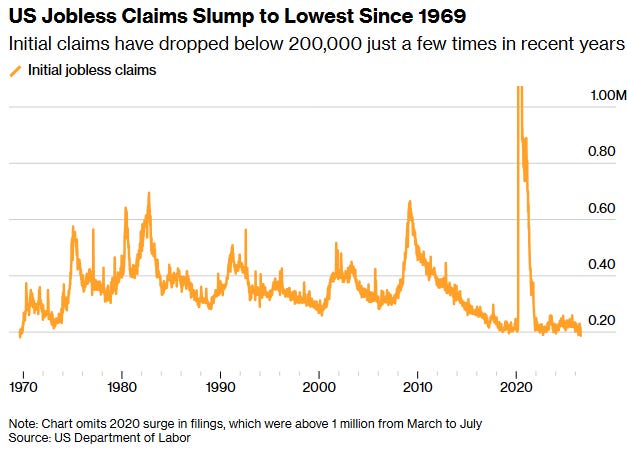
Initial unemployment claims fell to 187,000 last week, the lowest reading since 1969 and well below the 210,000 economists expected.
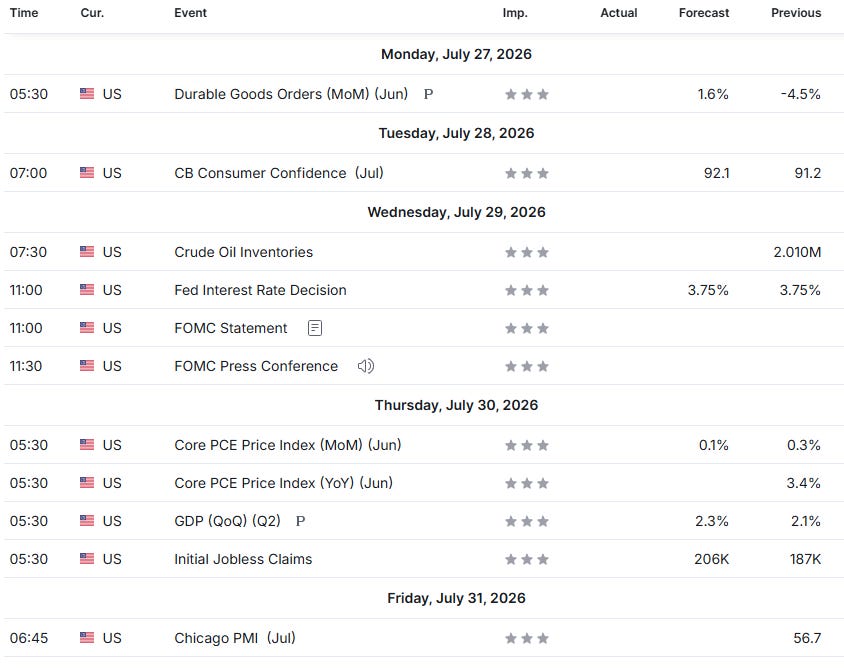
The data arrives ahead of the Fed’s July 28-29 FOMC meeting and with employers holding onto workers this tightly, the labor market simply isn’t generating the kind of distress that would push the Fed toward easing.
Bloomberg Economics noted that elevated corporate profit margins are allowing firms to invest and retain workers simultaneously, keeping the Fed squarely focused on the inflation side of its dual mandate rather than worrying about employment.
The caveat is that the headline number may be somewhat distorted by seasonal adjustment quirks. The unadjusted figure dropped by a larger-than-usual 53,718, led by sharp declines in New York, Michigan, and California.
Additionally, last month’s jobs report showed a meaningful drop in labor force participation, which mechanically reduces the pool of people who would file for unemployment benefits even if job conditions were softening. In other words, low claims may partly reflect people leaving the workforce rather than a tight hiring environment.
The CME Is Launching Single-Stock Futures Monday…
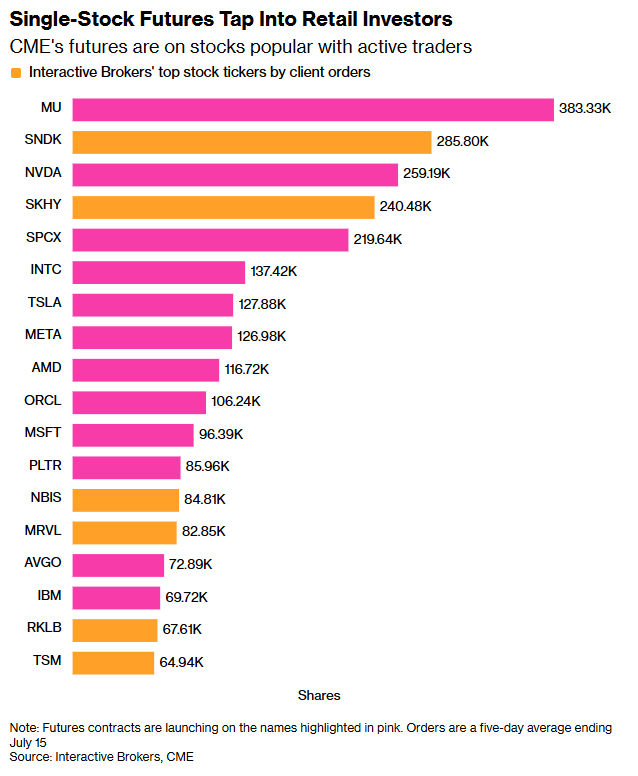
CME Group is launching single-stock futures on more than 50 major U.S. companies including Nvidia, SpaceX, and the Magnificent Seven, offering retail and institutional investors a new way to gain leveraged exposure to individual stocks without trading options.
The contracts are simpler than options (no need to understand the Greeks), cash-settled, available 23 hours a day five days a week, and come in two sizes: standard contracts based on 100 shares and micro contracts based on 10 shares.
CME tried single-stock futures once before, launching them in 2002 after a lengthy ban, but they never gained traction and were quietly shuttered in 2020.
The exchange is betting that today’s supercharged retail trading environment makes the timing finally right.
Single-stock futures offer genuine leverage, meaning gains and losses are amplified relative to the amount of capital deployed, and unlike the zero-commission stock and options trading available on most retail platforms, futures typically come with commissions.
Trading outside normal market hours, including during earnings releases, can also be exceptionally volatile and illiquid. The bigger question is whether retail investors will actually migrate to futures when call options and leveraged ETFs already serve similar purposes.
Forecast Ahead
In Case You Missed It