
📈🤲 Active Managers Struggling

Happy Sunday,
As 2025 comes to a close, markets are revealing the consequences of extreme concentration, shifting tax policy, and a renewed flight toward hard assets. Active managers have struggled to keep pace with a tech-dominated index, while investors continue to migrate toward passive strategies. At the same time, changes to the tax code are reshaping expectations for refunds in 2026, and precious metals are surging to record highs amid geopolitical uncertainty, currency weakness, and fears of fiscal debasement.
Here’s a closer look at the forces shaping markets as the year ends.
- Humphrey & Rickie

Market Report
Active Managers Struggle Against Tech Concentration
The year 2025 proved exceptionally difficult for active fund managers, as the Magnificent Seven continued to dominate the market. In a year where narrow market participation saw fewer than one in five stocks rising on many days, the S&P 500 significantly outperformed its equal-weighted counterpart.
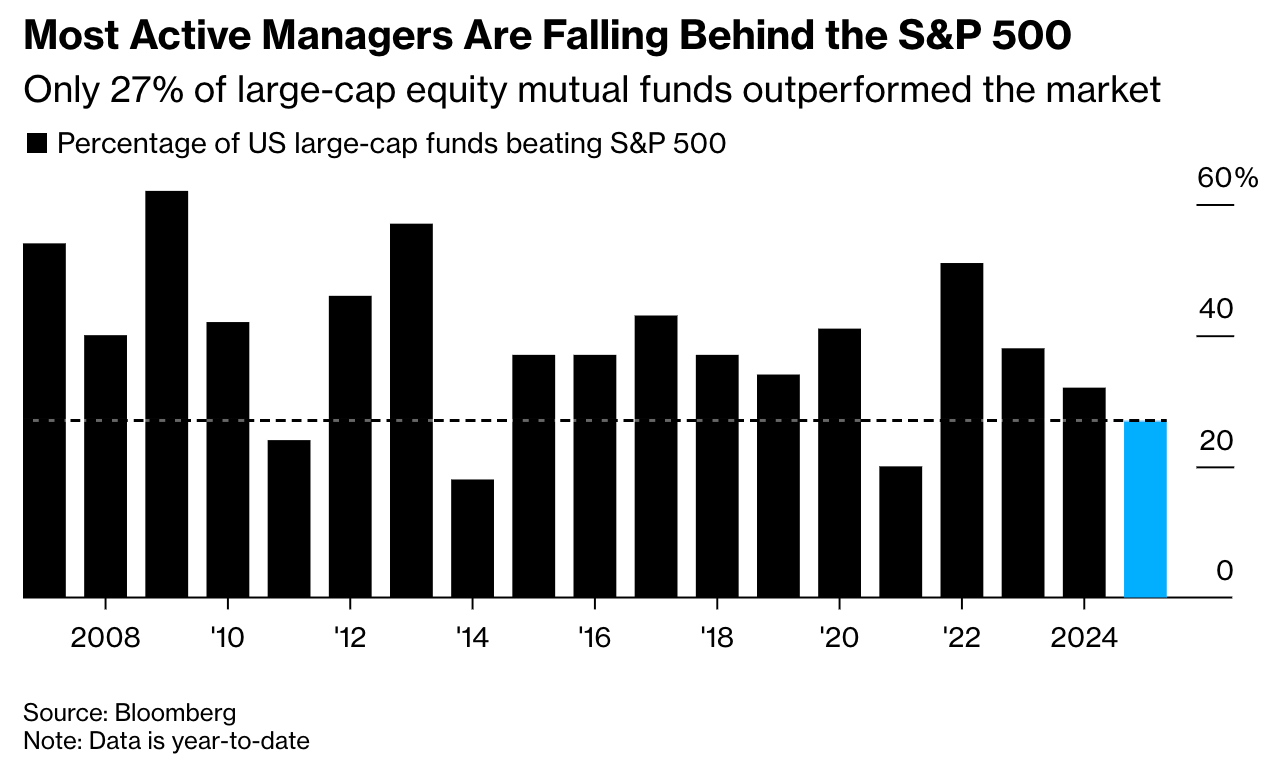
This concentration created a painful dilemma for active managers: those who diversified away from Big Tech to reduce risk often suffered severe underperformance.
Consequently, nearly 73% of US equity mutual funds trailed their benchmarks, marking one of the worst years for stock pickers since 2007.
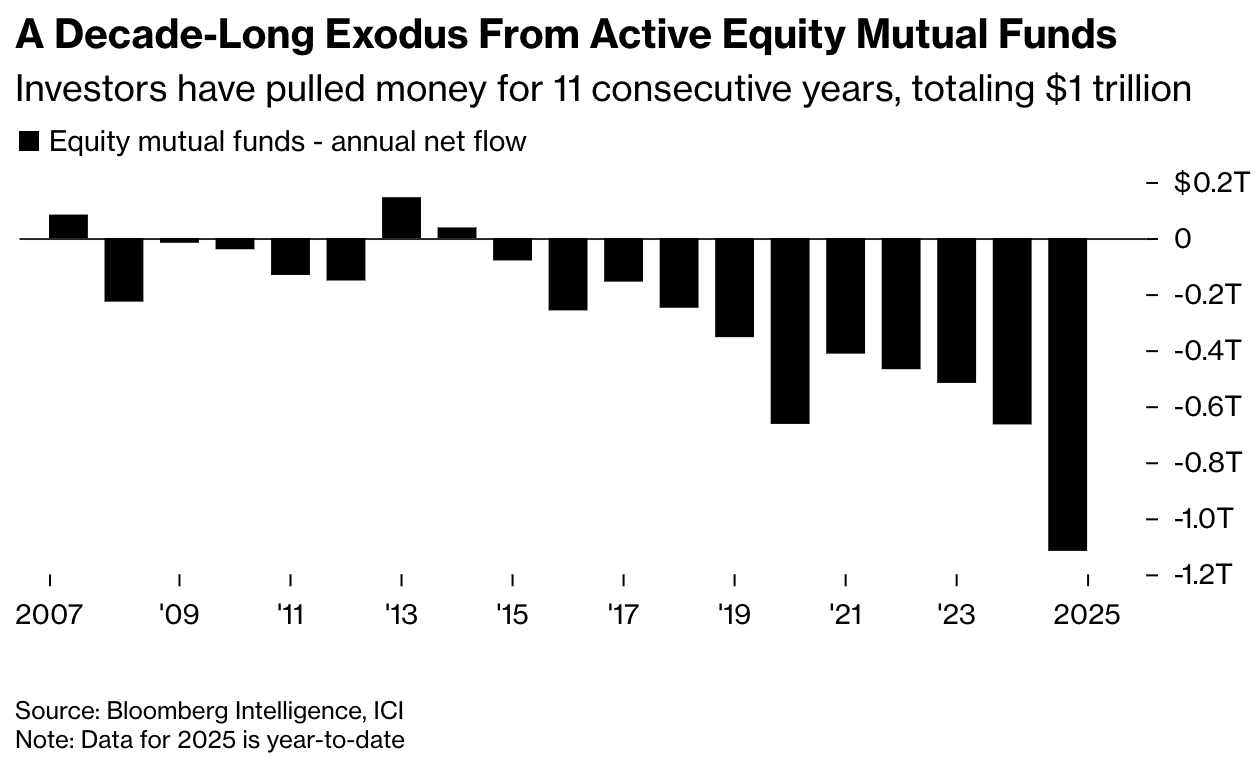
This persistent underperformance triggered a massive migration of capital, with investors pulling an estimated $1 trillion from active equity mutual funds, the 11th consecutive year of net outflows.
Meanwhile, passive equity ETFs captured over $600 billion as investors grew weary of paying higher fees for portfolios that failed to beat the index.
While some specialized funds found success by looking entirely outside the US large-cap space or leaning into thematic investing like global resources, the broader lesson of 2025 was that the financial cost of being different from the tech-heavy benchmark remained high.
Trump’s New Tax Law: Winners and Losers for Filing Season
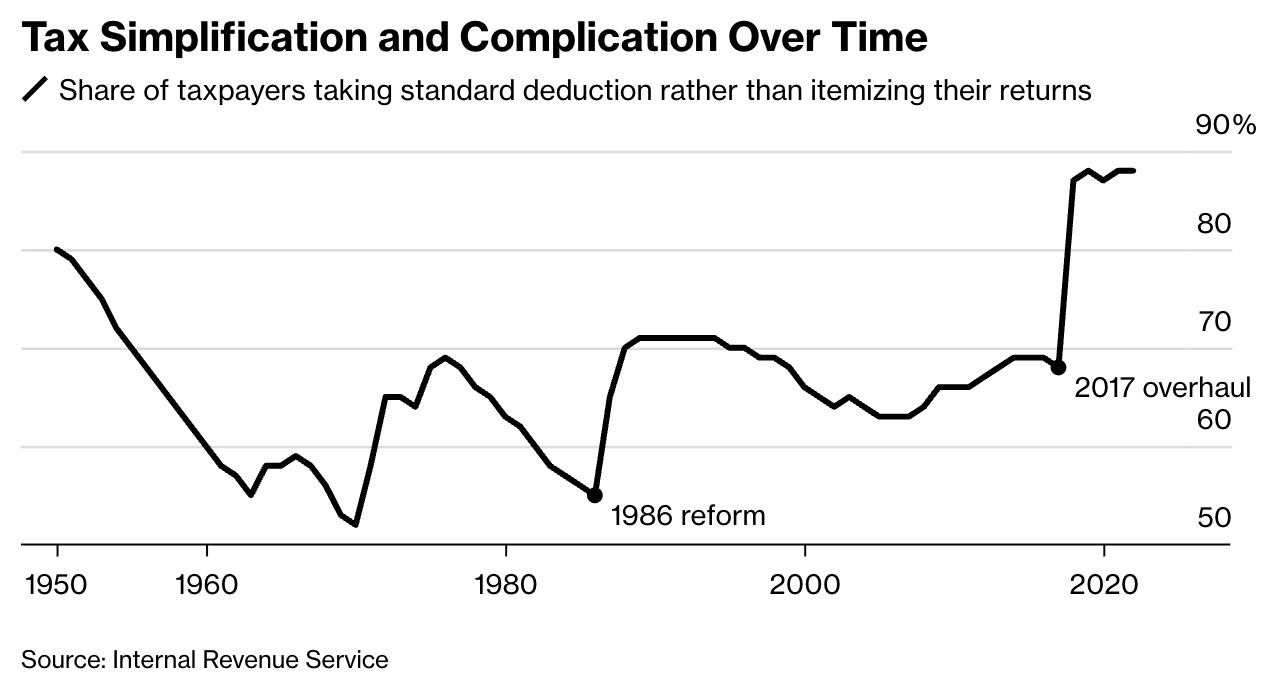
President Trump is promising substantial tax refunds in 2026 following the enactment of his tax law, though the benefits are highly concentrated among specific groups.
According to the Tax Foundation, the average refund, historically around $3,000, is expected to increase by $300 to $1,000. The primary beneficiaries include wealthy taxpayers in high-tax states (benefiting from a quadrupled SALT deduction of $40,000), parents, seniors, and tipped or overtime workers.
Specifically, about 25% of taxpayers will qualify for a boosted child tax credit, 13% for a new $6,000 senior deduction, and a combined 12% for overtime and tip deductions.
On the other hand, W-2 workers without children, estimated by the Cato Institute to represent over 50% of the tax-paying population, will likely see very little year-over-year change beyond a modest boost from the increased standard deduction.
Beyond the size of the refunds, concerns are mounting over potential delivery delays.
Senate Democrats have raised alarms regarding IRS staff cuts that eliminated 25% of the agency’s workforce, combined with leadership instability that saw seven different individuals acting as IRS commissioner in a single year.
Precious Metals Reach Historic Peaks in Year-End Surge
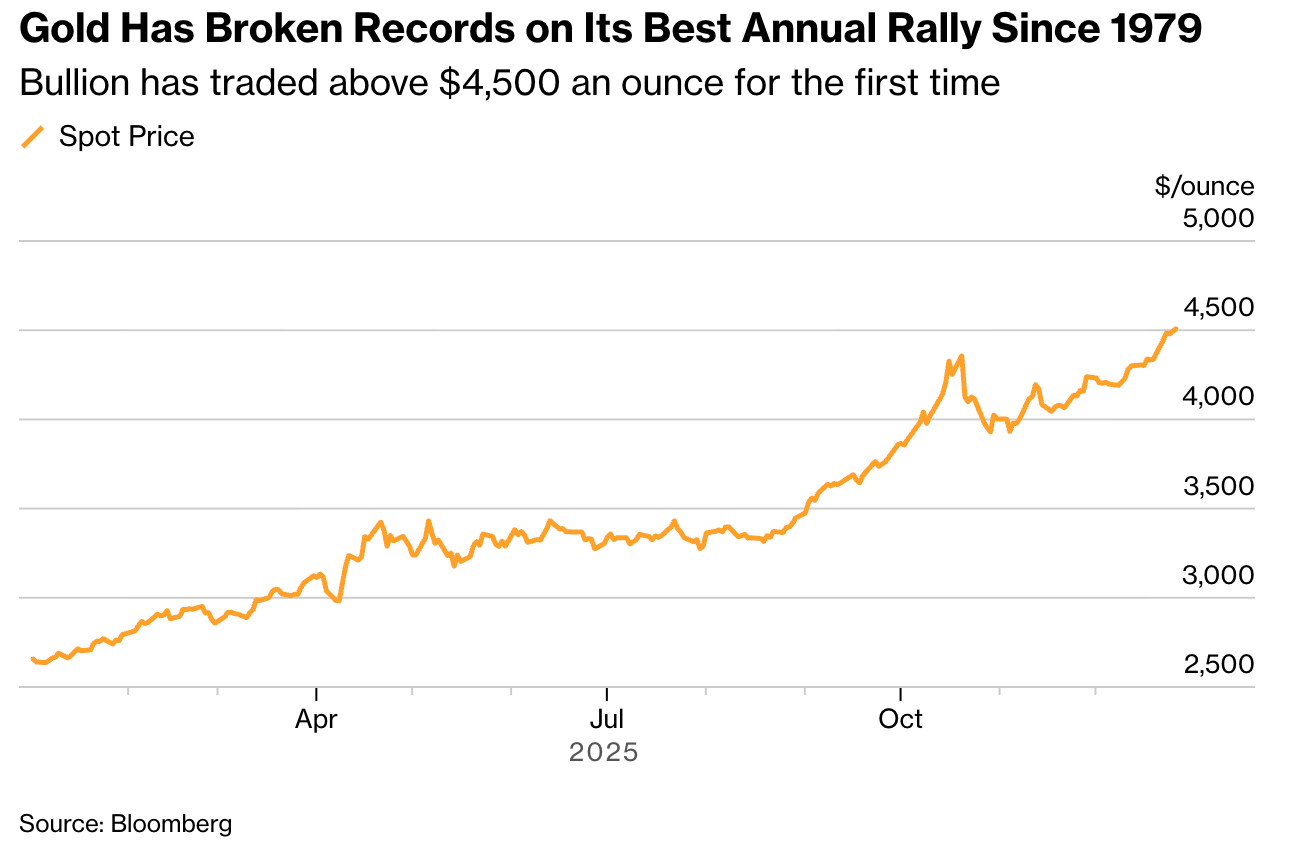
Gold, silver, and platinum surged to all-time highs last week, capping a historic year for precious metals driven by a perfect storm of geopolitical instability and macroeconomic shifts.
Spot gold peaked above $4,540 an ounce, marking a 70% annual gain, while silver crossed $77 an ounce, soaring over 150% this year.
These moves were fueled by escalating tensions internationally, a weakening US dollar, and aggressive central bank buying.
Additionally, the “debasement trade”, investors fleeing sovereign debt due to increasing global deficits, and expectations of further Federal Reserve rate cuts in 2026 have provided a powerful tailwind for precious metal assets.
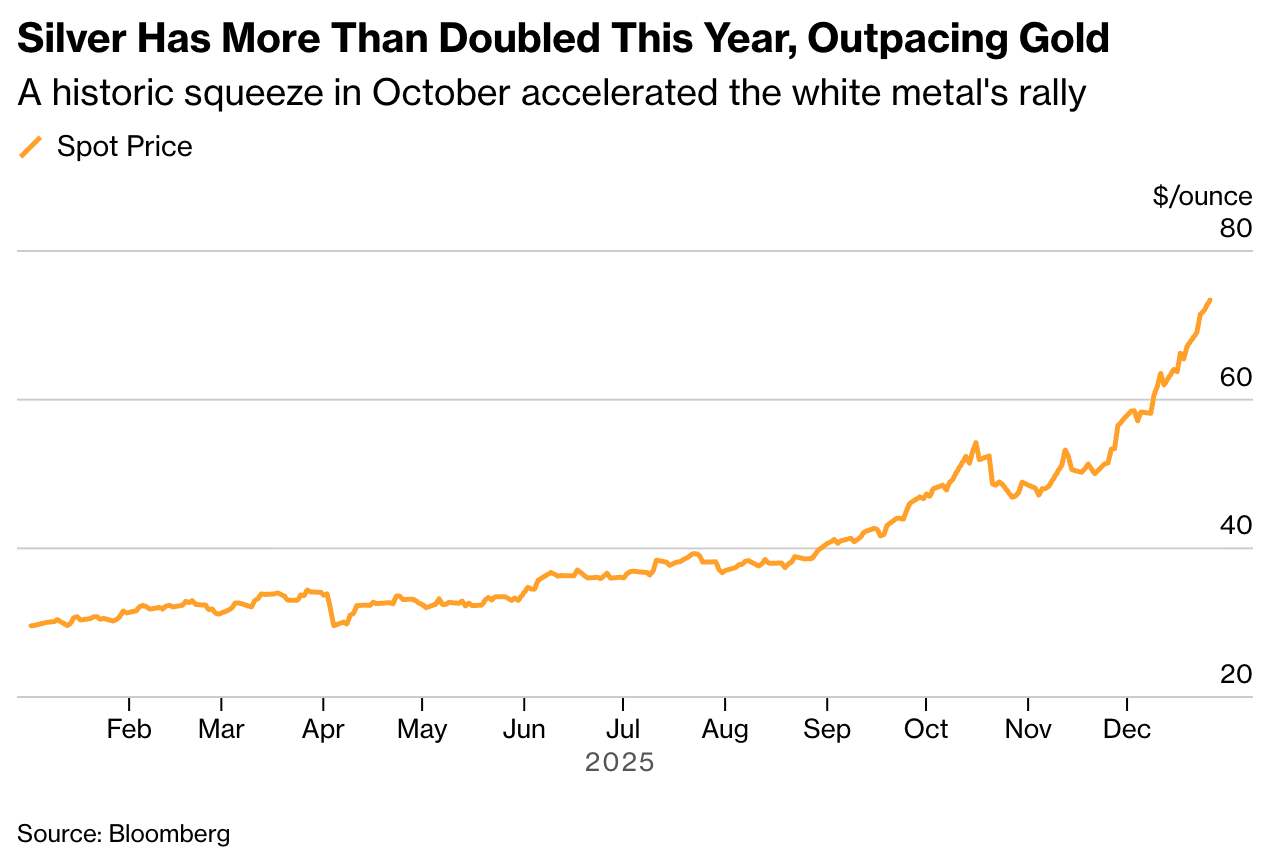
Silver and platinum have notably outpaced gold due to supply-side pressures and physical shortages. Silver’s spectacular rally was intensified by a short squeeze and a US Commerce Department probe into critical mineral imports, while platinum surged over 40% this month alone, hitting a record $2,400 an ounce.
Platinum’s rise was driven by a third consecutive year of global supply deficits caused by disruptions in South Africa.
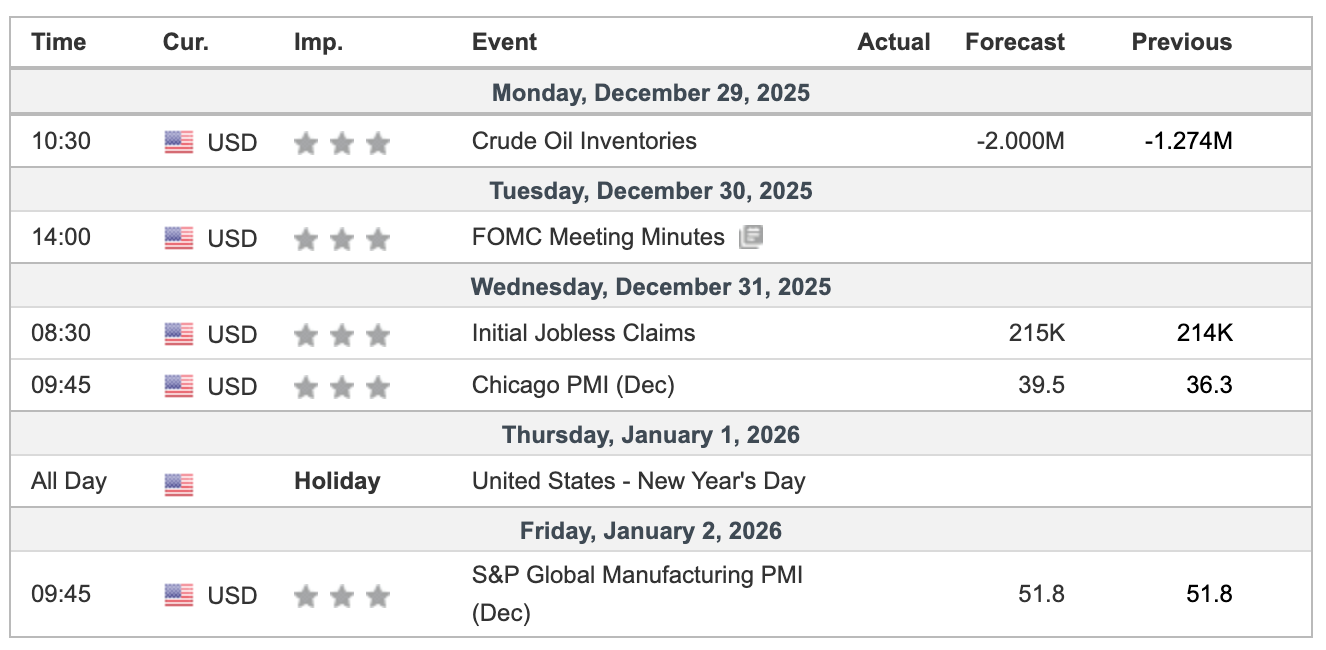
Forecast Ahead
Big Number

Overcome the Sunday Scaries

In Case You Missed It